Resurfacing · · 7 min read
Is Pool Resurfacing Worth It? Costs, Warning Signs and Lifespan
Resurfacing averages $11,000 per HomeGuide, while a new concrete pool runs $50,000 or more. See the warning signs, how often to replaster and when it pays.
By Outdoor Hardscapes Pool Finishes, pool finishing contractor in Pensacola, FL.
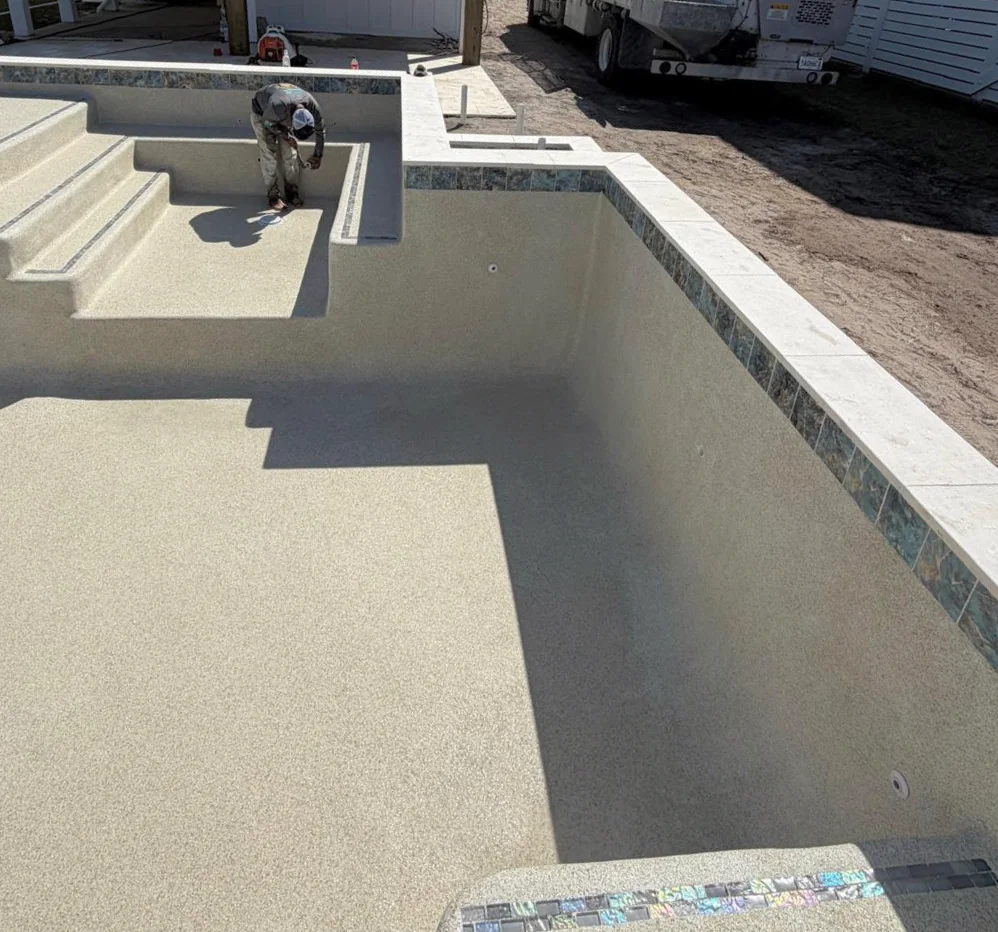
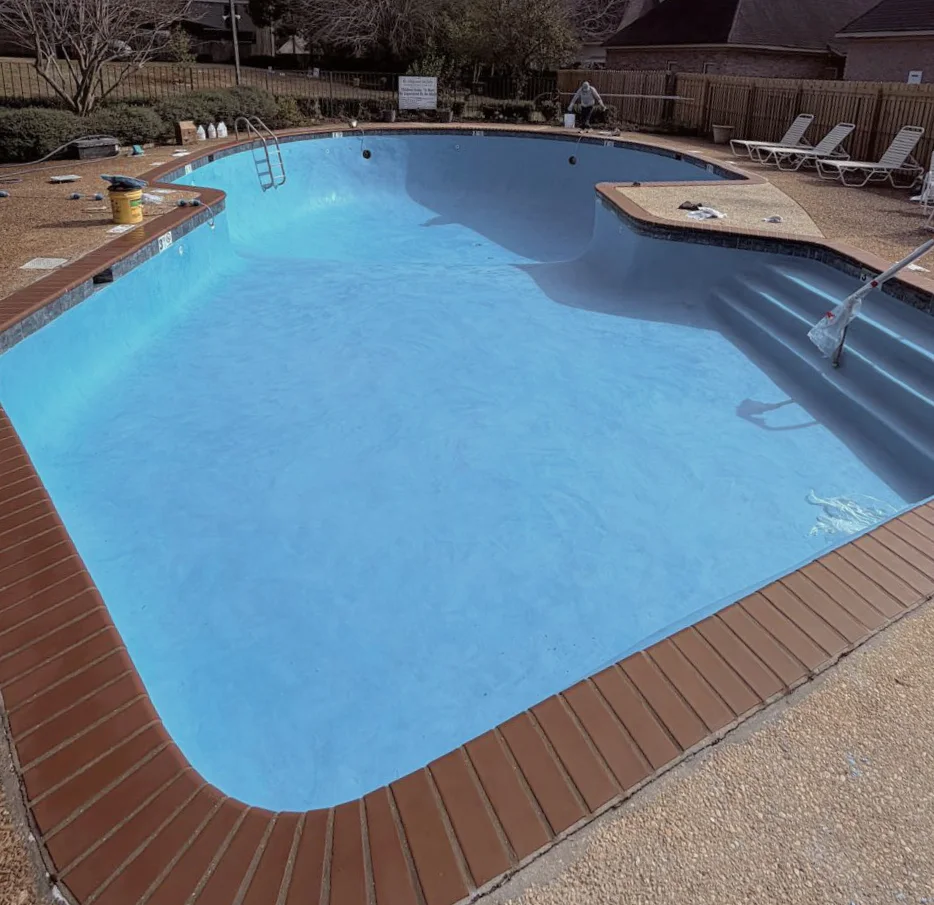
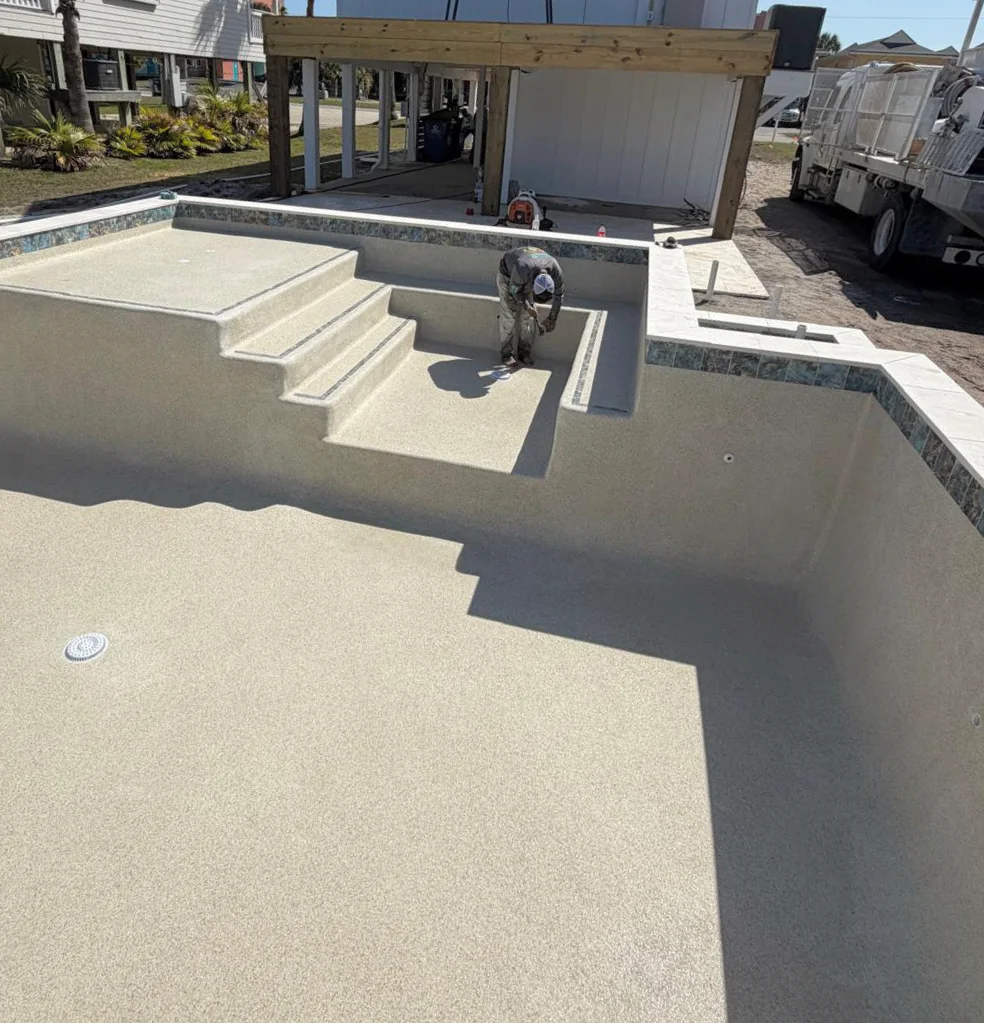
For a concrete pool with a worn-out finish, resurfacing is usually worth it. HomeGuide’s April 2025 cost guide puts the average resurfacing job at $11,000, while its July 2025 guide puts a new concrete pool at $50,000 to $120,000 and says concrete inground pools last 50 years or more but need resurfacing every 10 to 15 years. The finish wears out long before the shell does, so resurfacing is the normal upkeep of a concrete pool, not a sign that the pool has failed.
That does not mean every rough or stained pool needs a new finish right away. Below is how to tell when resurfacing pays off, when a cheaper fix makes more sense, and what can go wrong if the job is rushed.
Is it worth resurfacing a pool instead of replacing it?
A gunite or shotcrete pool is a concrete shell with a thin finish troweled over it. The shell is the expensive part and the long-lived part. The finish is the wear layer that touches the water every day.
HomeGuide’s numbers show the gap clearly. Resurfacing typically costs $6,000 to $15,000. Building a new concrete pool costs $50,000 to $120,000. Filling in or removing an inground pool costs $4,000 to $16,000, according to HomeGuide’s 2024 remodel guide, and then you have no pool at all. Unless the shell itself is failing, resurfacing is the option that keeps the biggest investment in your yard working.
A better way to judge the price is cost per year of service, because a finish that lasts twice as long can cost less over time even with a bigger invoice.
| Finish | Cost for 1,000 sq ft (HomeGuide) | Typical life (HomeGuide) | Cost per year of service (our math) |
|---|---|---|---|
| Paint | $1,000 to $2,000 | 5 to 7 years | $143 to $400 |
| Standard plaster | $6,000 to $8,000 | 7 to 12 years | $500 to $1,143 |
| Quartz plaster | $7,000 to $10,000 | 10 to 15 years | $467 to $1,000 |
| Pebble | $7,000 to $15,000 | 15 to 20+ years | $350 to $1,000 |
This is our own illustration, not a quote: cost per year divides HomeGuide’s low price by the longest life and its high price by the shortest life, for a pool with about 1,000 square feet of interior surface, and treats “20+” as 20 years. It leaves out draining, repairs and refill, which you pay again every time the pool is refinished.
Paint looks cheapest on paper, but every repaint means another drain, another round of prep and another refill, and HomeGuide notes that new paint must be compatible with the old coat. For a plaster pool, the real choice is usually between standard plaster, quartz and pebble. Our pool resurfacing cost guide shows those prices by pool size.
What are the signs your pool needs resurfacing?
HomeGuide lists the signs that a pool is ready for a new surface:
- Flaking or peeling plaster
- Chips or cracks in the surface
- Stains or discoloration that will not clean off
- A rough texture on the floor or walls
- Pebbles or other aggregate coming loose
- Corroded tile grout
- Chalky residue near the edges
The National Plasterers Council puts the decision simply: resurfacing becomes necessary when cracks and deterioration can no longer be patched or repaired, or when the pool’s appearance is no longer acceptable to you. By that test, a small crack that can still be patched is a repair, while a rough floor, widespread staining and loose aggregate all over the pool point to resurfacing.
If the problem is only stains on otherwise sound plaster, a professional pool acid wash may be enough for now. Our guide to pool plaster problems walks through what each symptom usually means.
How often should a pool be replastered?
There is no single number, because it depends on the finish and on how the water has been kept. HomeGuide’s resurfacing guide says to resurface every 7 to 15 years, with standard plaster lasting 7 to 12 years and aggregate and pebble finishes lasting 15 years or more; its inground pool guide gives 10 to 15 years for concrete pools in general.
The National Plasterers Council, the trade group for pool plasterers, gives a shorter figure for basic white plaster on its pool resurfacing page, which rates it as a 5 to 8 year surface. The same page rates quartz at 10 to 15 years and pebble at 12 to 18 years. We compare all of these estimates side by side in how long does pool plaster last.
The practical takeaway: if your plaster is past the 10-year mark and showing several of the signs above, start getting estimates before small problems turn into shell repairs.
What are common pool resurfacing problems?
Problems can show up in the first weeks or years later. The National Plasterers Council warns that white plaster will change in appearance over its life. The changes can be subtle, like slight shading or scaling, or more dramatic, like pronounced staining, etching, cracking or delamination in extreme cases. Colored plaster can show mottling, streaks and uneven color more than white does.
The council also points to the fill and start-up as a risk window:
- Stopping the fill. Once the water starts, it should run continuously until the pool is full. An interruption can leave a discolored “bowl ring” at the level where the water stopped.
- Leaving the finish dry. The council recommends getting the new surface under water as soon as practical, to avoid extra shrinkage cracking or the finish debonding from the shell.
- Skipping start-up care. The finish is especially susceptible to staining, scaling and discoloration during the first 28 days, so daily testing and brushing matter.
These are good questions to ask any contractor before you sign: who fills the pool, who handles the 28-day start-up, and what water balance they will aim for.
Can I resurface my pool myself?
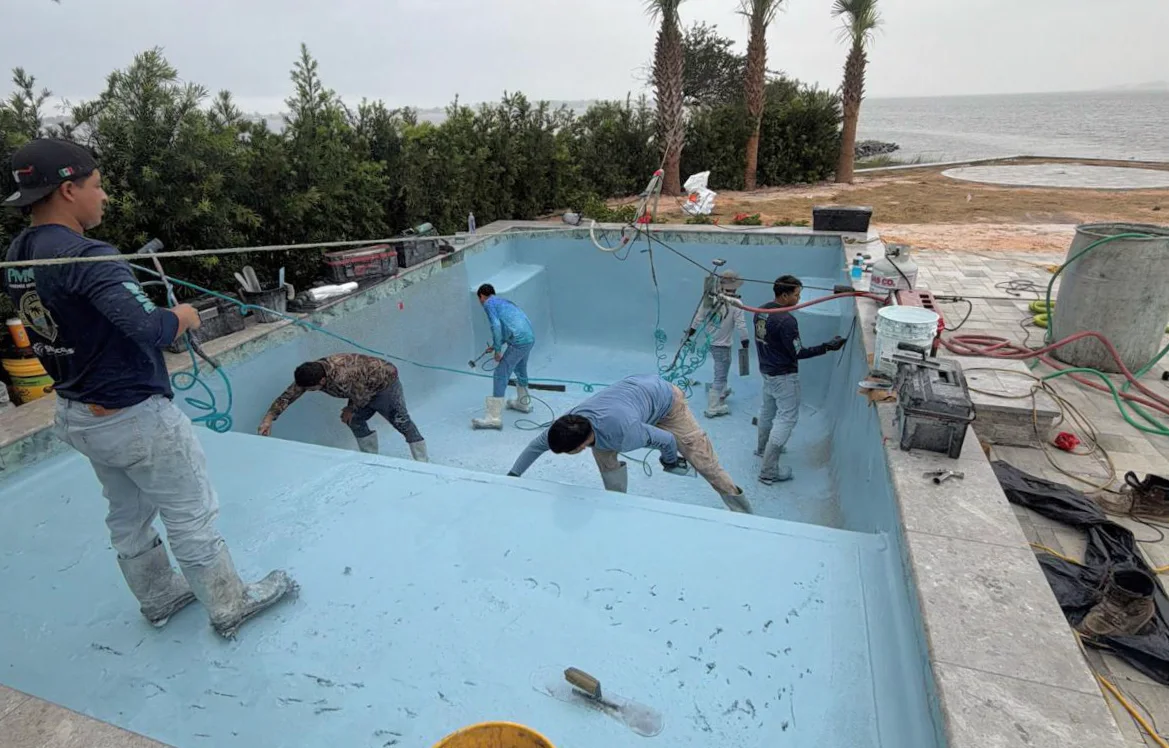
For a plaster, quartz or pebble finish, it is not a realistic DIY project. The National Plasterers Council says resurfacing requires expert plasterers, because a pool finish is a special cement-based mix designed for pools that is placed and finished in one single application. In other words, the whole interior is placed and finished by a crew in one go.
The prep is heavy work too. HomeGuide notes the old finish is removed by chipping, sandblasting, hydro-blasting or chemical stripping before the new one goes on.
Draining is the part homeowners underestimate most. A 2025 article in Shotcrete magazine, published by the American Shotcrete Association, warns that groundwater can push hard enough on an empty pool to crack it or lift the shell out of place, especially where the water table is high, and that heavy rain can raise groundwater quickly. It recommends assessing groundwater and soil before draining and consulting an experienced pool contractor or geotechnical engineer when in doubt.
When is resurfacing not the right call?
Resurfacing may not be worth it right now if:
- The shell has structural damage. HomeGuide stresses that cracks and leaks must be fixed before resurfacing, or they can spread into the new finish. Structural repair comes first.
- Only the surface color bothers you. Stains on sound plaster may respond to cleaning or an acid wash.
- You plan to remove the pool. A new finish does not make sense on a pool you will fill in.
On the other hand, if the waterline tile, coping or deck are also worn out, it often pays to do them while the pool is empty. HomeGuide notes that combining remodel projects can save both time and money.
What about timing on the Gulf Coast?
The Atlantic hurricane season runs from June 1 to November 30, and NOAA says most activity falls between mid-August and mid-October. A pool should not sit empty with a storm on the way, since heavy rain can raise groundwater quickly. Planning a resurfacing outside that peak, with a dry forecast for drain day, removes a lot of risk.
Our pool resurfacing page walks through the process, from surface preparation to the new finish, and we bring color samples to your home before you choose. If you are leaning toward a smooth finish, the quartz pool plaster page covers the Quartz series we apply.
If you are in Pensacola, Alabama or the Mississippi Gulf Coast and want a second opinion on your pool, request an estimate.
Sources
- How much does pool resurfacing cost?, HomeGuide, accessed November 25, 2026.
- How much does an inground pool cost?, HomeGuide, accessed November 25, 2026.
- How much does a pool remodel cost?, HomeGuide, accessed November 25, 2026.
- Swimming Pool Resurfacing, National Plasterers Council, accessed November 25, 2026.
- How Do You Choose the Proper Pool Finish?, National Plasterers Council, accessed November 25, 2026.
- Tips on Filling the Pool and Initial Start Up, National Plasterers Council, accessed November 25, 2026.
- Dewatering in Swimming Pools: Techniques, Benefits, and Best Practices, Shotcrete magazine (American Shotcrete Association), accessed November 25, 2026.
- Tropical Cyclone Climatology, NOAA, accessed November 25, 2026.