Tile · · 8 min read
Pool Tile Ideas for the Waterline: Sizes, Colors, 2026 Trends
Pool tile ideas for the waterline: the 6-inch band, 6x6 porcelain vs 1x1 and 1x2 glass, the most popular colors and the 10 tile trends from Coverings 2026.
By Outdoor Hardscapes Pool Finishes, pool finishing contractor in Pensacola, FL.
The most useful pool tile idea starts with the band itself. Blue Haven Pools notes that a waterline tile band is almost always at least 6 inches tall, which lets the water sit near the middle with about 3 inches of tile showing above it. Inside that band you make three choices: the format (6x6 porcelain or small glass mosaic), the color, and where the tile continues past the waterline, such as spa walls and step edges. For 2026, the 10 tile trends presented at the Coverings tile and stone show lean toward greens, texture and small metallic accents, according to Pool Magazine (June 2026).
What is the tile on the edge of the pool called?
The band of tile at the top of the pool wall is called waterline tile. HomeGuide describes it as a decorative border installed around the perimeter of the pool just below the coping, partly or fully under water. The coping is a different part: it is the cap on top of the wall that you sit on and grab when you climb out. For the full picture of that edge, see what pool coping is and how it meets the tile.
Waterline tile is not only decoration. Pools collect mineral scale and biofilm at the water surface, the so-called scum line. Blue Haven explains that on bare plaster this line can stain the finish and is hard to clean, while tile has a smooth, non-porous surface that only needs brushing. That is why the band runs around the whole pool even when the rest of the interior is plaster, quartz or pebble.
How tall should the waterline tile band be?
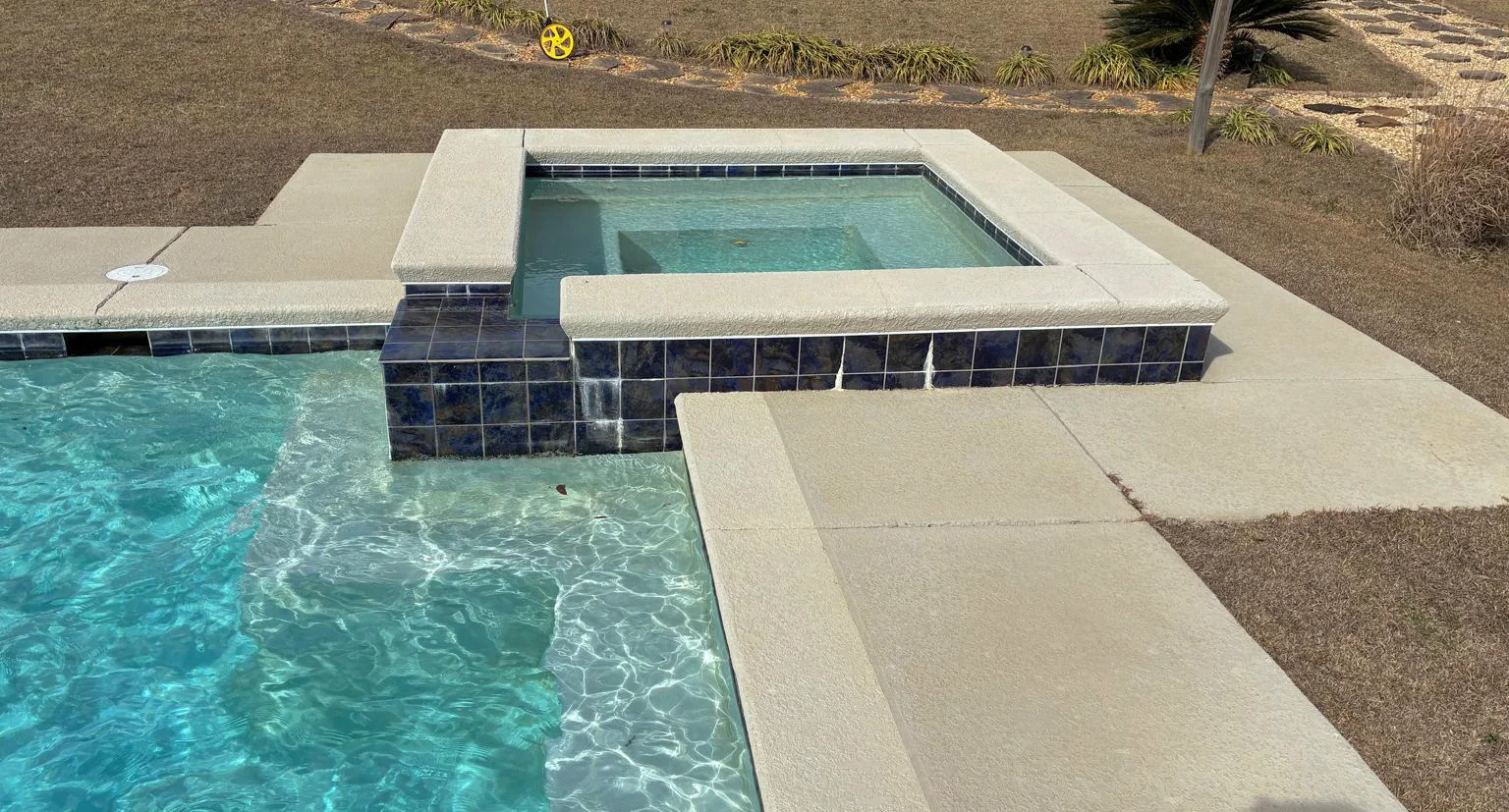
For most residential pools the answer is 6 inches: one course of 6x6 tile, or the same height in mosaic. Taller bands make sense where the wall rises above the water. Blue Haven describes a raised bond beam, such as the wall of an elevated spa or a water feature, as rising 12 inches or more above the water, usually in 6-inch steps, and notes that builders often tile those vertical faces above the waterline. A tiled raised spa with a narrow spillway, like the one in the photo above, adds height and contrast to a backyard pool.
Florida has a rule for public pools that shows how the industry thinks about the band. Section 454.1.2.1(a) of the 2023 Florida Building Code (8th edition), the edition in force until the 9th edition takes effect on December 31, 2026, requires public pools to have a tile line at least 4 inches tall at the water line, made of tiles at least 1 inch on each side, and the band may not exceed 12 inches if a dark color is used. That section belongs to the code’s public pool rules (Section 454.1), so a backyard pool is not held to it, but it is a useful reference: cover the waterline fully and keep dark color to a controlled strip.
| Band height | Where it is used | Tile needed per 100 linear feet |
|---|---|---|
| 4 inches | Minimum tile line for Florida public pools (2023 FBC, 454.1.2.1(a)) | About 33 sq ft |
| 6 inches | Standard residential waterline band | 50 sq ft |
| 12 inches | Raised bond beam, spa wall or wider decorative band | 100 sq ft |
| 18 inches | Taller raised wall, tiled in 6-inch steps | 150 sq ft |
The area column is simple math: band height in feet times length. Add a margin for cuts on curves and corners.
Which tile formats suit a waterline?
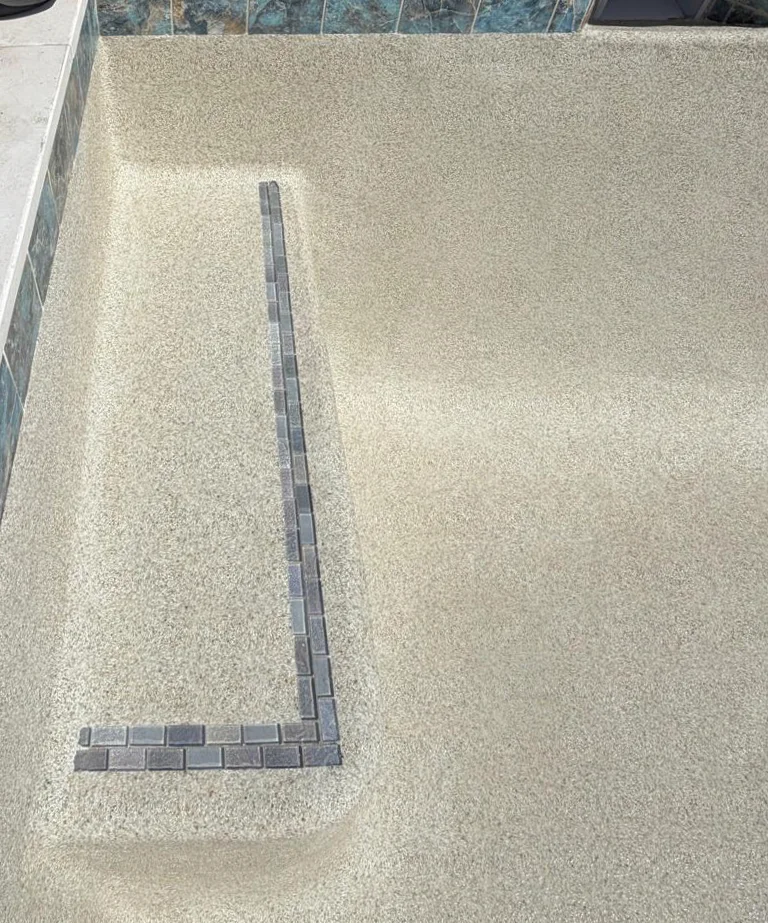
We install two families of waterline tile: 6x6 porcelain and glass mosaic in 1x1 and 1x2 formats. They create very different looks, mostly because of the number of grout joints and the way glass handles light.
| Format | Pieces per linear foot of a 6-inch band* | Tile-only cost per sq ft (HomeGuide, Jan. 2026) | What it looks like |
|---|---|---|---|
| 6x6 porcelain | 2 | $2 to $25 | Clean, classic band with few grout joints |
| 1x2 glass mosaic | 36 | $8 to $50 | Linear shimmer that follows curves |
| 1x1 glass mosaic | 72 | $8 to $50 | The most light play and color depth |
*Nominal tile size, grout joints not counted.
Glass tile has its own national standard. According to the Tile Council of North America (TCNA), ANSI A137.2 requires glass tile for wet and outdoor use to pass a thermal shock test over a 100°F temperature range, and it recommends face-mounted sheets for submerged use. Porcelain follows the ceramic tile standard instead. If you are weighing the two, our glass vs porcelain pool tile comparison covers absorption, heat and cost in detail, and our pool tile page covers the porcelain and glass tile we install.
What is the most popular color for pool tile?
Blue leads. Pebble Technology International, a maker of pool finishes and glass tile, told Luxury Pools magazine in 2022 that blends of blues are by far the most popular color choice, and that homeowners nationally prefer tile that blends with the water color rather than contrasting with it. The same company pointed out a regional difference that matters here: in hot markets such as Florida, Texas and Las Vegas, cooler and lighter colors are preferred.
Some practical color ideas:
- Mid blue or a blue blend. The classic look. It softens the line where the water meets the tile.
- Navy, cobalt or charcoal. A sharper frame around the water. It works well on a raised spa wall, where the dark band reads from across the yard.
- Green or sage. The 2026 direction described below, and a good match for natural landscaping.
- Warm neutrals. Sand and beige tones that tie the tile to travertine or brick coping.
Color reads differently under water and next to the interior finish, so pick the tile together with the plaster, quartz or pebble pool finish that will sit below it. We bring color samples to the site, so you can see tile, finish and coping side by side in your own light before you decide.
What are the trends for pool tile in 2026?
A dated read on 2026 comes from Coverings, the annual tile and stone show, where industry ambassador Alena Capra presented the year’s trends. Pool Magazine’s June 2026 report translated the 10 trends presented there into pool and outdoor design. These are the ones that apply to a waterline:
- Jade Terrain. Green becomes a base color, from soft sage to deep emerald, for water that looks more natural.
- Micro-Illusions. Small formats return with more detail and texture, mixed with larger tile. On a pool, think a porcelain band with a glass mosaic accent.
- Gilded Age. Metallic finishes used as accents, including at the waterline and on spillways, not across the whole band.
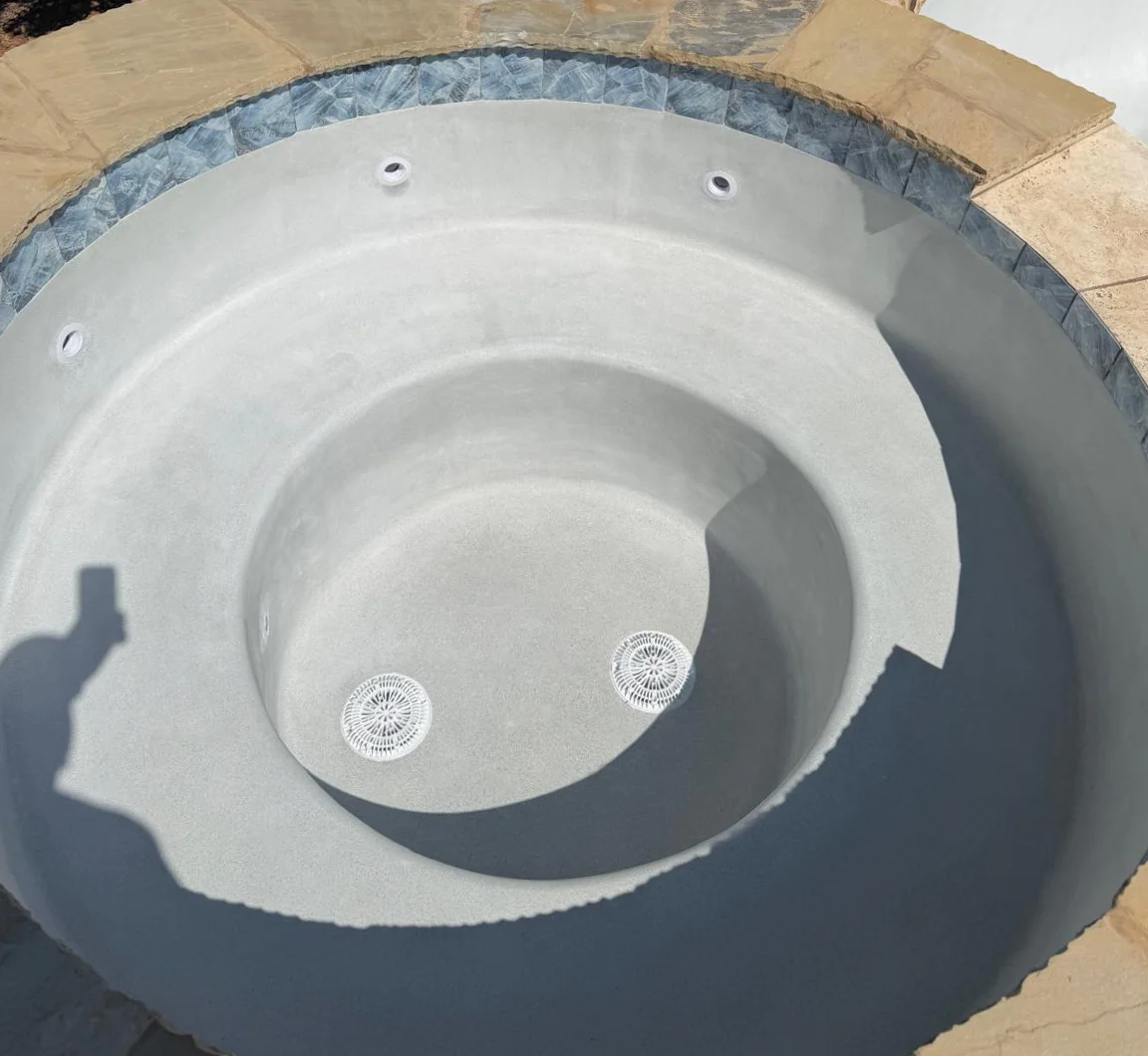
- Haptic Experience. Textured, sculpted tile you want to touch, including waterline tile and spa interiors.
- Brutalish Sanctuary. Matte, raw-looking surfaces, large-format pavers and matte coping in warm neutrals.
- Surface Technologies. Better slip-resistant surfaces, which matter on steps and ledges.
Trends at a design show describe where manufacturers are heading, not what every pool should do. A waterline band stays in place for years, so a classic band with a trend-driven accent is often easier to live with than a trend across the whole pool.
Which waterline tile ideas work on a Gulf Coast pool?
Six ideas that use the formats we install:
- A single course of 6x6 porcelain in a blue blend. The fewest grout joints and the lowest tile cost in HomeGuide’s ranges.
- A 1x1 or 1x2 glass mosaic band. More reflection and depth of color, and small pieces follow a freeform curve without heavy cutting.
- Porcelain band, glass accents. Porcelain on the long runs and glass mosaic on the spa, spillway or step edges. This is the mixed-format idea behind the Micro-Illusions trend.
- Tile all the way up a raised spa wall. Carry the waterline tile to the top of the wall and tile the spillway to match.
- Contrasting step and ledge edges. For public pools, the CDC Model Aquatic Health Code (2024, 5th edition, the current one) requires the leading edges of stair treads to be outlined with a continuous slip-resistant, contrasting tile 1 to 2 inches wide. The same idea in glass mosaic can make steps easier to see in a backyard pool.
- Light, cool colors. Pebble Technology reported in 2022 that homeowners in hot markets such as Florida prefer cooler, lighter colors. A light sage band with a light interior follows that preference and the 2026 green trend at the same time.
For the tile above the water, Custom Building Products, a maker of tile setting materials, advised in a 2014 white paper that exposed glass tile that may be heated by sunlight should be protected from splashes of cool water when possible, because glass expands differently from ceramic and is more likely to crack from thermal shock outdoors. That is one more reason to use glass that meets ANSI A137.2, set with a mortar made for glass.
What does a new waterline band cost?
National cost guide HomeGuide (January 2026) puts installed waterline tile at $1,900 to $4,800 for a 16 by 32 foot pool. That pool has 96 linear feet of waterline, so a 6-inch band is about 48 square feet of tile. The real price depends on the size and shape of the pool, the tile you choose, the condition of the wall behind the old tile, and whether the work is combined with resurfacing or coping, and it comes out of a site visit and a written estimate. To see what the job involves from start to refill, read our guide to replacing pool tile. Because the tile band sits between the coping and the interior finish, many owners plan it together with new pool coping.
If you are in Pensacola, Alabama or the Mississippi Gulf Coast and want a second opinion on your pool, request an estimate.
Sources
- Waterline Swimming Pool Tiles 101: Basics and Key Purposes, Blue Haven Pools, accessed November 25, 2026.
- 2023 Florida Building Code, Building, 8th Edition, Chapter 4 (Section 454.1), International Code Council, accessed November 25, 2026.
- Using Color to Make a Poolscape Pop, Luxury Pools Magazine, accessed November 25, 2026.
- Top 10 Tile Trends To Watch For Pools and Outdoor Living in 2026, Pool Magazine, accessed November 25, 2026.
- How Much Does Pool Tile Cost?, HomeGuide, accessed November 25, 2026.
- Introducing ANSI A137.2, The New Standard for Glass Tile, Tile Council of North America, accessed November 25, 2026.
- 2024 Model Aquatic Health Code, Code Language, Centers for Disease Control and Prevention, accessed November 25, 2026.
- Installing Tile in Pools and Fountains, Custom Building Products, accessed November 25, 2026.