Coping · · 7 min read
What Is Pool Coping? Types, Edges and Cost Explained
What is pool coping? The cap on the pool wall you sit on and grab. Types, bullnose and square edges, code dimensions and costs of $40 to $80 per foot.
By Outdoor Hardscapes Pool Finishes, pool finishing contractor in Pensacola, FL.
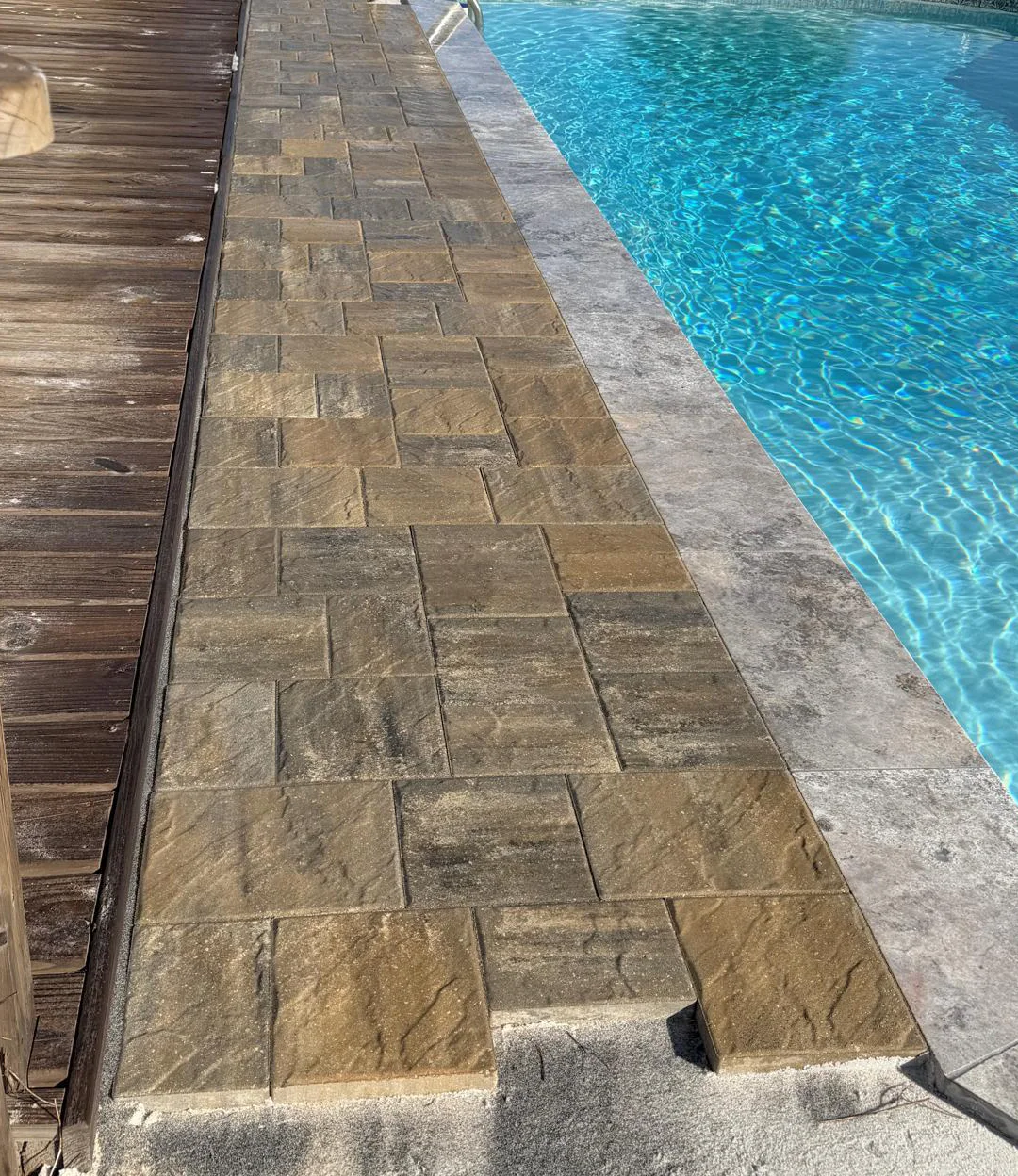
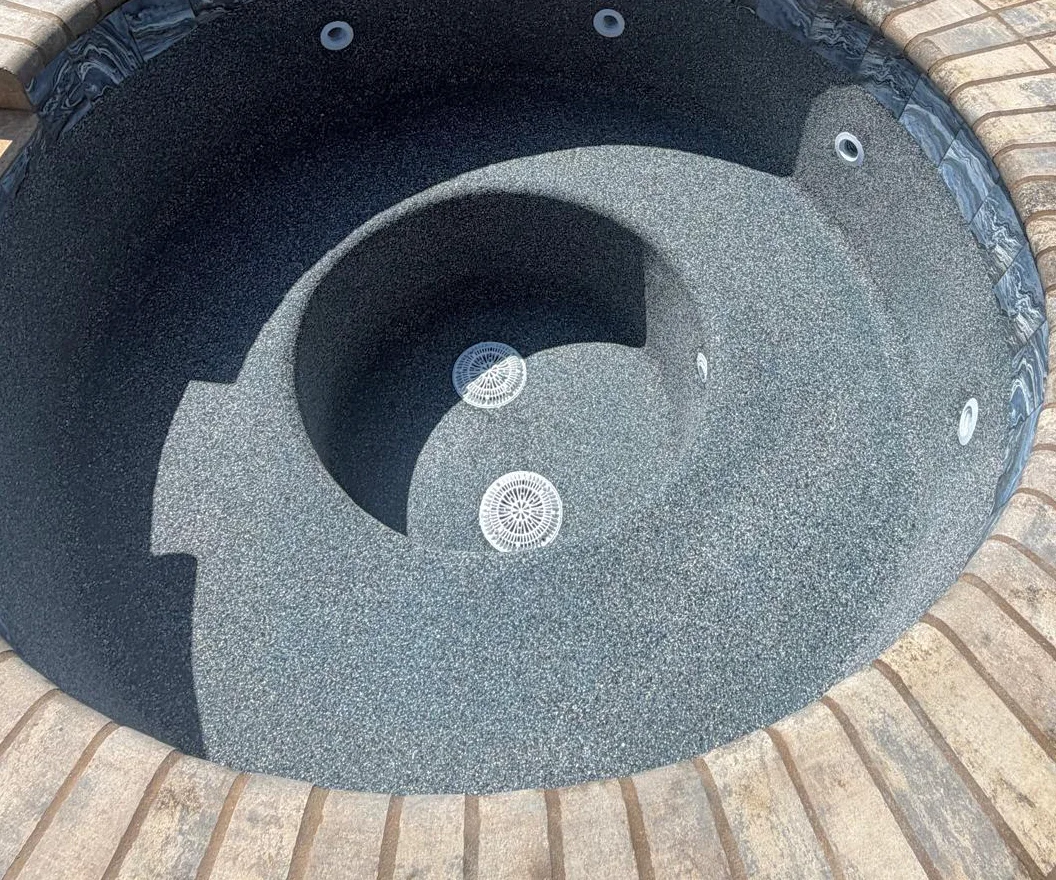
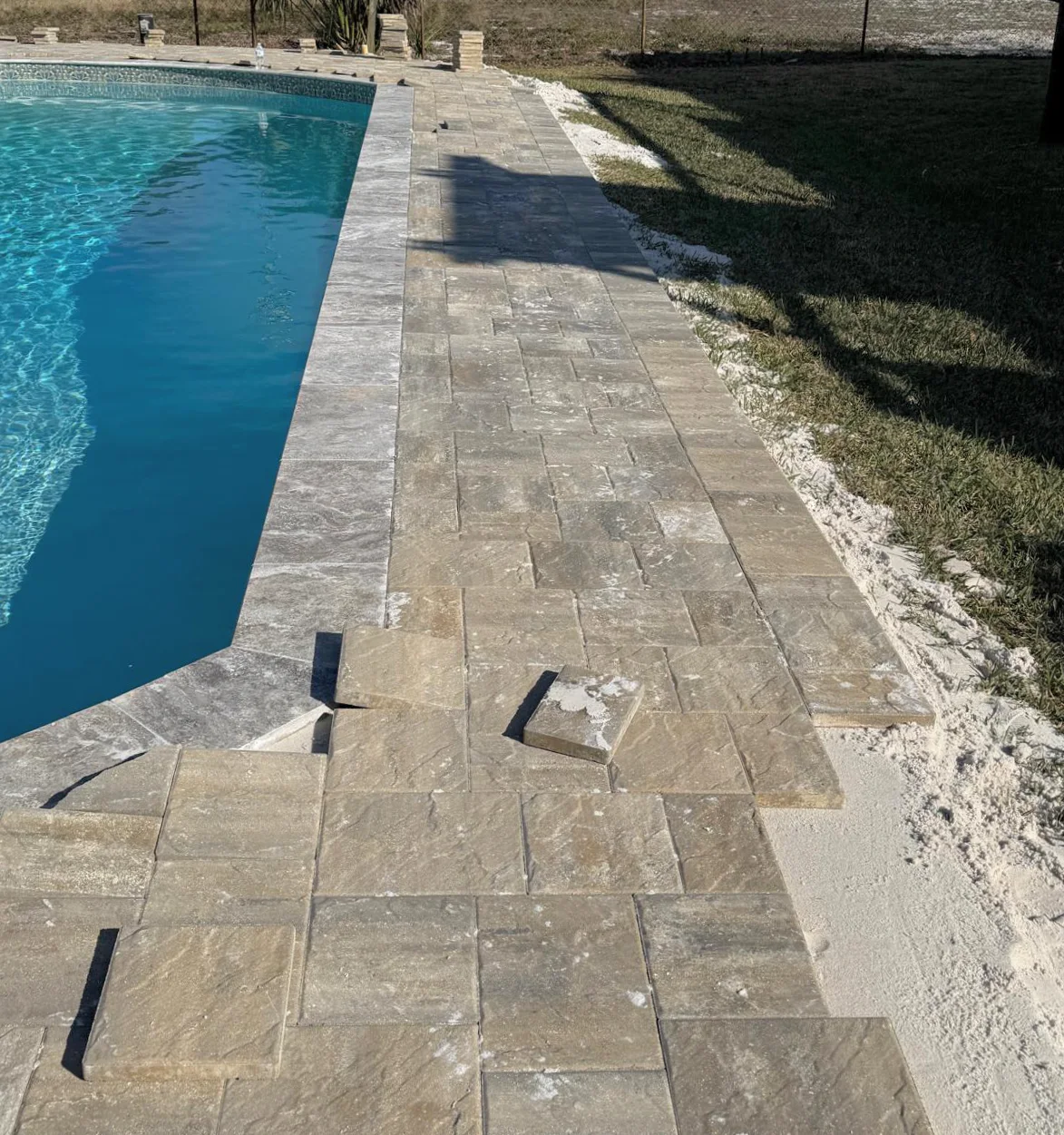
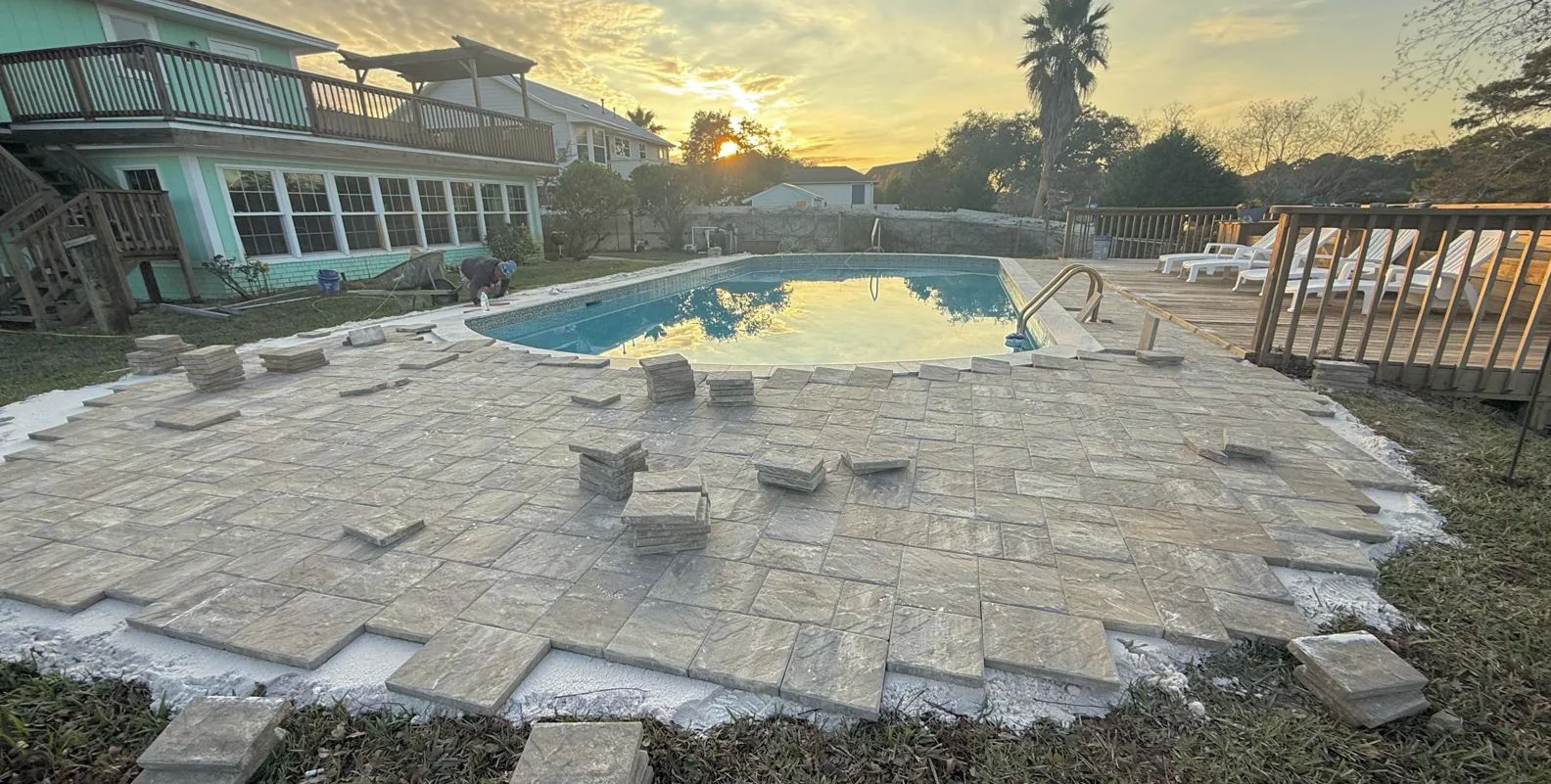
Pool coping is the cap that sits on top of the pool wall, or bond beam, where the water meets the deck. It covers the top of the shell and its steel, gives swimmers a handhold, and sends splash water away from the pool. For public pools, the CDC’s 2024 Model Aquatic Health Code (5th edition, the current one) requires coping to overhang the wall by no less than 1 inch and no more than 2 inches, and national cost guide HomeGuide (January 2026) puts installed coping at $40 to $80 per linear foot, depending on the material.
What is pool coping?
On a concrete pool, the top of the wall is a thickened ring called the bond beam. Swim University explains that this beam often has steel projecting from it, and the coping covers all of that. The coping is the finished edge you see, sit on and hold onto every time you get in or out.
Coping does four jobs at once:
- Protects the shell. HomeGuide notes that good coping covers the exposed edge of the shell and its steel, and keeps water from seeping behind the shell.
- Gives a handhold. The edge is what swimmers grab at the deep end. The CDC code lists coping as one of the accepted handholds on public pools deeper than 24 inches at the wall.
- Moves water away. Splash water runs off the coping toward the deck instead of down behind the pool wall.
- Frames the pool. Coping is the line between water and deck, so its color and edge shape a big part of how the pool looks.
How coping is attached depends on the material. Swim University describes brick, natural stone and paver coping as mortared directly onto the beam and then sealed, while cantilevered concrete coping is poured with the deck over foam forms fixed to the top of the wall.
What is the tile on the edge of the pool called?
The band of tile just below the coping is waterline tile. HomeGuide describes it as a decorative border installed around the perimeter of the pool just below the coping. The two parts are planned together: Blue Haven Pools notes that a standard waterline band leaves about 5 to 6 inches between the top of the coping and the water surface, a height that keeps getting in and out comfortable. For ideas on that band, see our pool waterline tile ideas, and for the tile work itself, our pool tile page.
What are the main types of pool coping?
Coping is named by material and by edge profile. HomeGuide’s January 2026 cost guide gives these installed prices per linear foot:
| Coping material | Installed cost per linear foot (HomeGuide, Jan. 2026) | What HomeGuide says about it |
|---|---|---|
| Concrete | $40 to $55 | Poured or precast; can crack from freeze-thaw in colder climates |
| Paver | $50 to $70 | Individual pieces can be replaced if damaged |
| Brick | $45 to $65 | Classic look; porous, so it needs sealing; can last decades |
| Natural stone | $60 to $80 | Granite, limestone, bluestone; stays cooler underfoot than concrete |
| Travertine | $55 to $80 | Cool surface and non-slip texture; porous, needs regular sealing |
| Sandstone | $55 to $75 | Warm color; softer stone, more prone to weathering |
| Composite | $45 to $70 | Low maintenance; no sealing needed |
We install two of these: travertine and brick. As one example of sizing, a Texas Travertine product listing offers bullnose travertine coping in 12 by 24 inch pieces, 1.25 or 2 inches thick. Brick coping often has a rounded edge too: River Pools and Spas notes that the main difference between brick and paver coping is the edge facing the pool, bullnose or rounded on brick and a factory edge on pavers, though it adds that these terms vary by region. For a deeper side-by-side, read our pool coping materials comparison, or see the travertine and brick coping we install on our pool coping page.
The total depends on the length of the edge. HomeGuide notes that a small plunge pool might need only 40 linear feet while a large freeform pool can need 150 or more. At HomeGuide’s $40 to $80 range, that is roughly $1,600 on the small end to $12,000 or more on the large end, before any repair to the bond beam. The real price for your pool comes out of a site visit and a written estimate.
Is bullnose pool coping outdated?
No. Bullnose is a profile, not a material: Swim University describes it as a flat top with a rounded front edge. HomeGuide calls it popular for traditional pools, safer for children and easier to grip when getting in or out. Public pool rules lean the same way: the CDC Model Aquatic Health Code requires coping with rounded, slip-resistant edges on public pools that do not have perimeter gutters.
Modern designs also use square and eased edges. Pool Magazine’s June 2026 report on the Coverings tile show even lists matte coping in warm neutrals as part of a raw, minimal design trend. So bullnose is a style choice, not a dated one. On a traditional home or a pool used by children, it remains the comfortable default.
What type of edge is best for pool coping?
It depends on the house, the deck and who swims. These are the common profiles:
- Bullnose. Rounded front edge. Swim University calls it one of the most comfortable options for swimmers and easy to grab, and it is a common profile on brick and travertine coping.
- Square or eased edge. A crisp 90-degree edge, sometimes with the corner lightly rounded. HomeGuide notes it is less expensive than rounded profiles and suits modern architecture; Swim University warns it is sharper, which matters with young kids.
- Cantilevered. A poured concrete edge that extends slightly over the pool. HomeGuide says it usually costs more because of the precision needed.
- Flat. Sits flush with the deck, often on deck-level or vanishing-edge pools, and allows wider pieces that double as seating.
Whatever the profile, a few dimensions keep the edge safe and comfortable. The CDC numbers below are written for public pools, but they are a useful reference for any pool.
| Dimension | Number | Source |
|---|---|---|
| Overhang past the pool wall | 1 to 2 inches | CDC MAHC 2024, 4.5.14.4 (public pools) |
| Typical residential overhang | 1 to 1.5 inches | Swim University |
| Coping thickness at the overhang | 2.5 inches maximum | CDC MAHC 2024, 4.5.14.5 (public pools) |
| Handhold height above static water level | 9 inches maximum | CDC MAHC 2024, 4.5.14.1.1 (public pools) |
| Top of coping to water surface | About 5 to 6 inches | Blue Haven Pools |
| Example travertine coping piece | 12 x 24 inches, 1.25 or 2 inches thick | Texas Travertine product listing |
How long does pool coping last?
HomeGuide says quality pool coping lasts 10 to 30 years, depending on the material and maintenance. Concrete coping generally lasts 15 to 25 years, while natural stone can exceed 30 years with proper care. A coping replacement project typically takes 3 to 7 days, according to the same guide.
Coping usually needs attention when stones crack, loosen or sit uneven, or when the pool is being renovated and the edge should match a new interior finish and tile. Watch the joint between the coping and the deck as well. The CDC code requires public pools to have a continuous watertight expansion joint there, designed to protect the coping and its mortar bed when the deck moves. When that joint fails, water and movement reach the mortar under the coping. If your edge is already loose, our guide to replacing pool coping walks through the job.
Which coping suits Gulf Coast heat?
On a hot coast, how the coping feels underfoot is worth weighing. HomeGuide describes travertine as known for its cool surface temperature and non-slip texture, and natural stone in general as staying cooler underfoot than concrete on hot summer days. That is why travertine is worth considering where summers are long and hot.
Two practical notes for our climate:
- Sealing. HomeGuide points out that both travertine and brick are porous. Travertine needs regular sealing to prevent staining and algae growth, and brick needs sealing to limit water absorption and staining.
- Matching the deck and the house. Brick coping pairs naturally with a brick home or patio, while travertine coping blends into a travertine or paver deck. Because coping, waterline tile and deck meet at the same edge, planning them together keeps the joints aligned. Our pool deck page covers the paver and travertine decks that sit behind the coping.
If you are in Pensacola, Alabama or the Mississippi Gulf Coast and want a second opinion on your pool, request an estimate.
Sources
- How Much Does Pool Coping Cost?, HomeGuide, accessed November 25, 2026.
- 2024 Model Aquatic Health Code, Code Language, Centers for Disease Control and Prevention, accessed November 25, 2026.
- What Is Pool Coping and How Is It Installed?, Swim University, accessed November 25, 2026.
- Inground Pool Coping: Idea and Cost Guide, River Pools and Spas, accessed November 25, 2026.
- 2 Inch 12 x 24 Ivory Blend Bullnose Travertine Pool Coping, Texas Travertine, accessed November 25, 2026.
- Waterline Swimming Pool Tiles 101: Basics and Key Purposes, Blue Haven Pools, accessed November 25, 2026.
- How Much Does Pool Tile Cost?, HomeGuide, accessed November 25, 2026.
- Top 10 Tile Trends To Watch For Pools and Outdoor Living in 2026, Pool Magazine, accessed November 25, 2026.