Pool finishes · · 8 min read
StoneScapes Mini Pebble: Colors, Texture and What to Expect
StoneScapes Mini Pebble is NPT's most popular pebble size for over 15 years. See all 17 Mini colors, the water color each makes, cost and start-up care.
By Outdoor Hardscapes Pool Finishes, pool finishing contractor in Pensacola, FL.
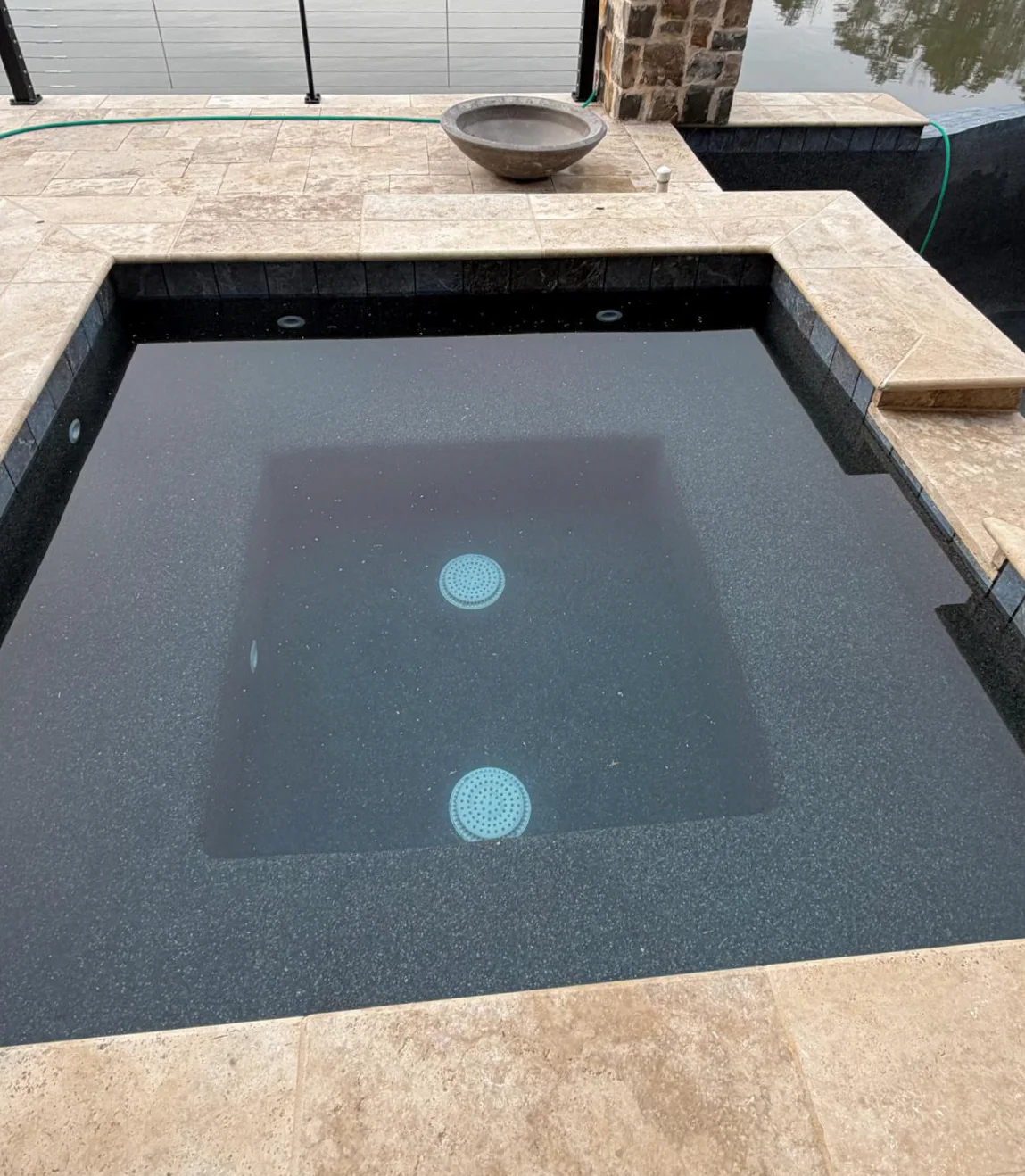
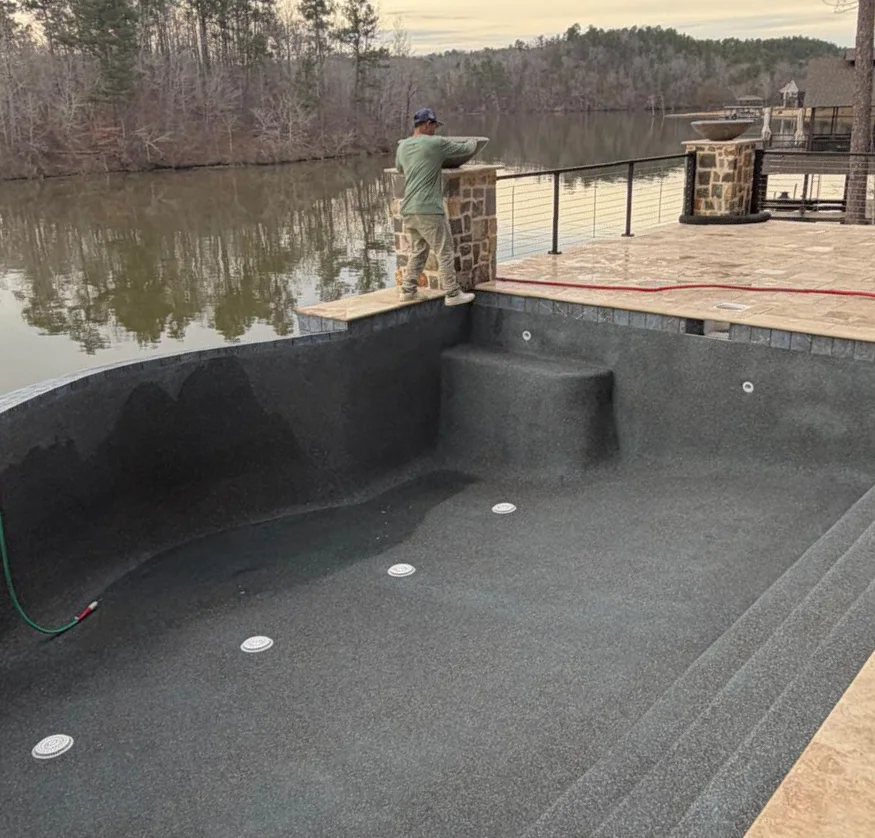
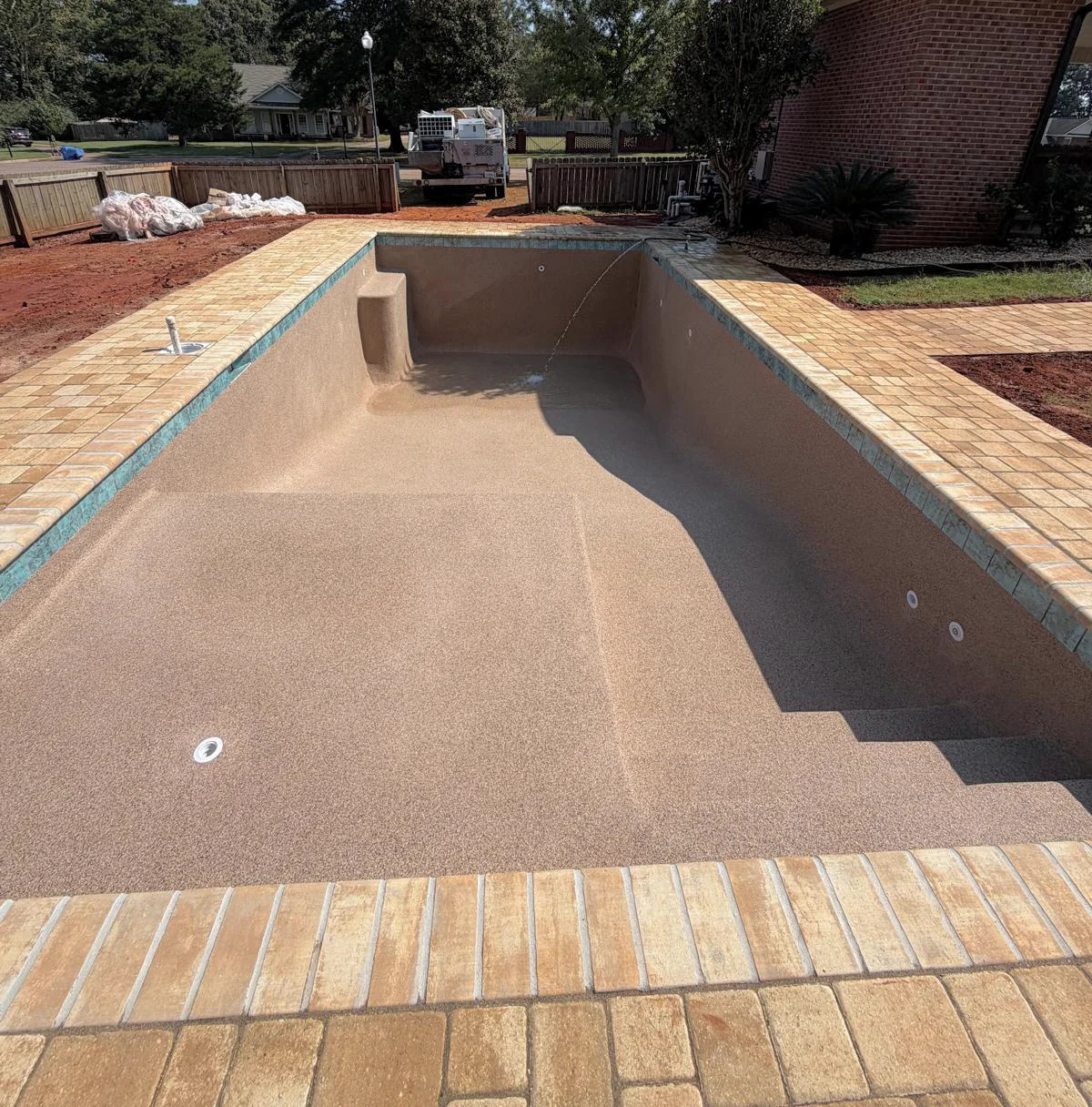
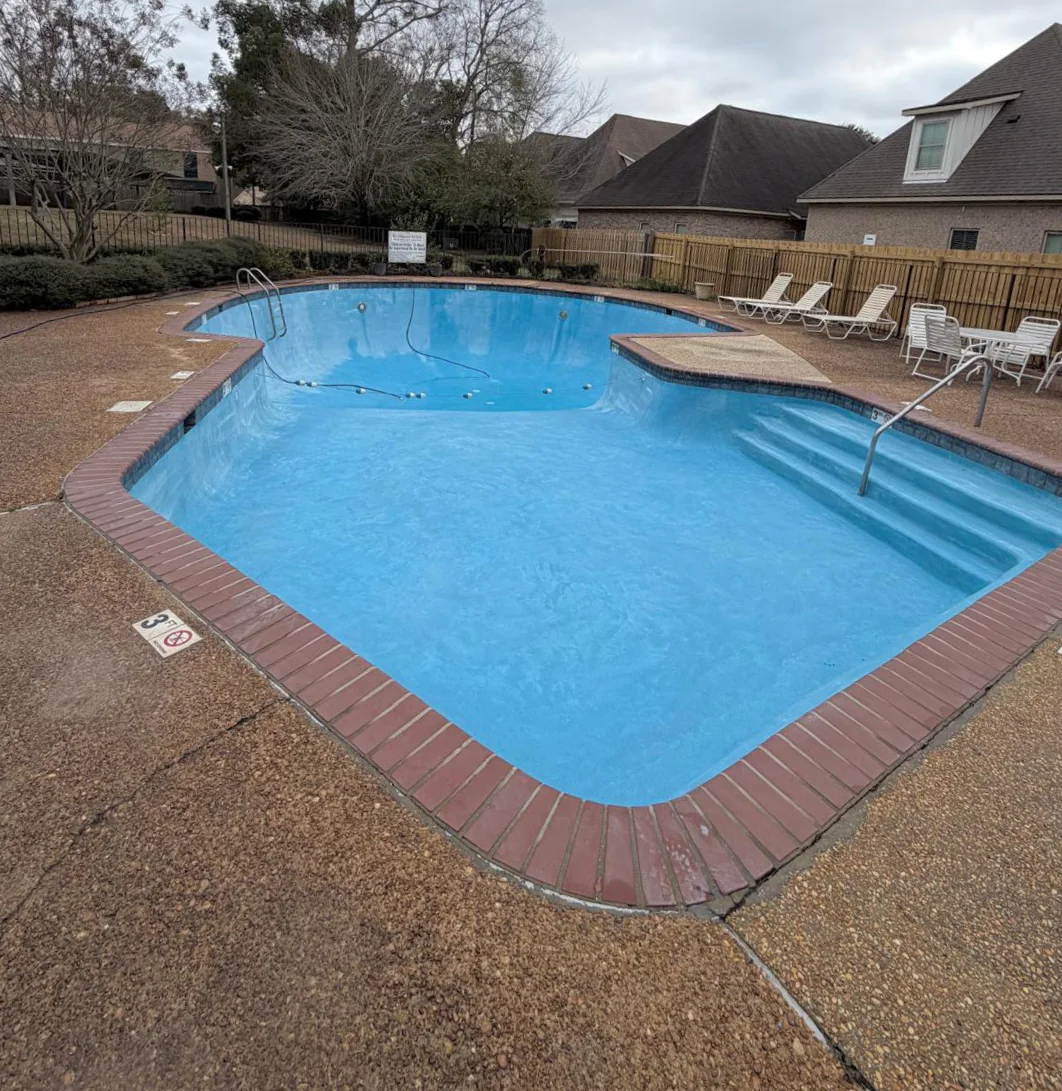
StoneScapes Mini Pebble is a pebble pool finish made by NPT from natural quartz pebbles, pigment and white Portland cement, with stones that are larger than NPT’s Micro line and smaller than its Regular line. NPT says Mini has been its most popular pebble size for over 15 years, and its online finish catalog listed 17 Mini Pebble colors when we checked on November 25, 2026.
Mini is the middle ground in the pebble world: more natural texture and color depth than plaster, a softer feel than full-size pebble. Below is what it is made of, every current color and the water color NPT rates it for, what it costs nationally, and how to give it a good start.
What is StoneScapes Mini Pebble made of?
NPT describes StoneScapes as a formulated pool finish system that uses naturally occurring quartz pebble, specialty aggregates, pigment and white Portland cement. Each color is a specific recipe. A few examples from NPT’s product pages show how much the mix varies:
- Aqua Blue Mini uses aqua blue pigmented cement with natural black, gold and white quartz pebbles.
- Astuto and Dapple Gray use feldspar aggregate instead of quartz pebble.
- Black Mini can include some naturally occurring seashell, which NPT says comes from the beaches of Baja California.
- Tropics Blue Mini adds colored quartz highlights and abalone shell.
NPT also recommends adding its Lobo pool finish modifier to every batch of StoneScapes. According to NPT, Lobo raises compressive strength, improves the bond to the pool shell and increases resistance to damage from chemical imbalance.
How does Mini compare with Micro and Regular pebble?
StoneScapes comes in three pebble sizes plus two glass add-ons. Here is how NPT describes each, with the number of colors its catalog listed for each line on November 25, 2026.
| StoneScapes line | How NPT describes it | Colors listed on nptpool.com |
|---|---|---|
| Micro | Smoothest pebble NPT offers, enriched with tiny iridescent glass beads | 8 |
| Mini | Larger than Micro, smaller than Regular; most popular size for over 15 years | 17 |
| Regular | Biggest pebble NPT offers and its original finish; smooth stones you can still feel | 13 |
| Touch of Glass (add-on) | Colored glass beads added in a 1, 2 or 3 bag formula | 9 |
| Puerto Rico Blend Small / Large (add-on) | Petite iridescent glass beads in two sizes | 14 / 10 |
NPT’s own guide to its finish lines, which shows no date, names 13 Mini colors. The four catalog colors that guide does not name are Astuto, Dapple Gray, Magnolia White and Rubicon Bay; NPT’s product page calls Magnolia White the newest white-toned addition.
If you are weighing pebble against plaster or quartz in general, our comparison of plaster vs quartz vs pebble covers cost and life span side by side.
Which Mini Pebble colors are available, and what water does each make?
This chart lists every Mini Pebble color in NPT’s catalog on November 25, 2026, with the water color NPT assigns to it and the main ingredients from its product page.
| Color | Water color (NPT) | What is in it (NPT) |
|---|---|---|
| White Mini | Light blue | White cement, white quartz pebbles |
| Magnolia White | Light blue | White cement, Osprey White pebbles |
| Astuto | Light blue | White cement, feldspar aggregate |
| Salt and Pepper Mini | Light blue | White cement, black and white pebbles |
| Aqua Cool Mini | Light blue | White cement, white pebbles, cobalt blue quartz highlights |
| Aqua White Mini | Medium blue | Aqua blue pigmented cement, white pebbles |
| Aqua Blue Mini | Medium blue | Aqua blue pigmented cement, black, gold and white pebbles |
| Caribbean Blue Mini | Medium blue to blue green | Blue/gray pigmented cement, black and gold pebbles |
| Tahoe Blue Mini | Medium blue to blue/green | Blue/gray pigmented cement, black and gold pebbles |
| Rubicon Bay | Medium blue | Blue/gray pigmented cement, black, white and gold pebbles |
| Tropics Blue Mini | Dark blue | Dark blue pigmented cement, colored quartz and abalone shell |
| Midnight Blue Mini | Dark blue to dark blue/green | Midnight blue pigmented cement, colored quartz highlights |
| French Gray Mini | Light gray to medium blue | French gray pigmented cement, black and white pebbles |
| Dapple Gray | Light gray | French gray pigmented cement, white feldspar, blue quartz highlights |
| Sand Mini | Light green to green | Tan pigmented cement, black and gold pebbles |
| Black Mini | Deep dark green | Black pigmented cement, black pebbles, some seashell |
| Cameroon Mini | Deep dark green | Black pigmented cement, black, gray and green pebbles |
Two notes from NPT’s pages are worth knowing before you fall for a color. Black Mini and Cameroon Mini can look gold in very shallow water, such as a sun shelf. And NPT says Midnight Blue Mini ranges from dark blue to dark blue/green depending on the depth of the pool and its surroundings. For a broader look at how finish color shapes water color, see our guide to pool plaster colors.
What is Mini Pebble with glass?
“Mini Pebble with glass” usually means a Mini Pebble color with one of NPT’s glass add-ons:
- Touch of Glass adds colored glass beads for sparkle and richer water color. NPT offers it in 9 colors, from Aqua Blue to Tropics Blue, in a 1, 2 or 3 bag formula depending on how strong you want the effect.
- Puerto Rico Blend adds petite iridescent glass beads, in Small and Large sizes, also in 1, 2 or 3 bag formulas.
NPT says both enhancements can be added to any StoneScapes finish. More bags mean a stronger effect, so this is a choice to make with the sample in hand.
What affects how long a Mini Pebble finish lasts?
NPT does not publish a life span in years for Mini Pebble. National cost guide HomeGuide (2025) gives pebble finishes 15 to 20+ years, longer than the 7 to 12 years it gives standard plaster. Three things decide where a given pool lands in that range:
- The start-up. The National Plasterers Council (NPC) says a cement pool finish is especially susceptible to staining, scaling and discoloration in its first 28 days. NPT’s start-up page says plaster starts to hydrate as soon as it is mixed and puts a number on that period: 86 percent of the cement in the plaster cures within those 28 days. That 86 percent figure is stated for plaster; NPT does not publish a separate one for pebble.
- Water balance afterward. The pebbles are stone, but the cement that holds them is not. The NPC’s color-loss bulletin explains that aggressive water, meaning low calcium hardness, low pH or low alkalinity, dissolves parts of the cement surface and can leach pigment up to 1/8 inch deep.
- Your fill water. This matters here on the Gulf Coast. A 1986 U.S. Geological Survey report says the water in the sand-and-gravel aquifer that supplies Pensacola generally has hardness under 10 mg/L and is slightly acidic. That describes raw aquifer water, not what comes out of your tap after utility treatment, so test your own fill water before the pool is filled. The NPC’s White Paper 7 (August 2025) recommends fill water above 200 ppm calcium hardness for a cement finish, so soft water needs calcium added as the pool fills.
When a pebble finish does wear out, HomeGuide lists loss of pebbles or other aggregate, a rough texture and stains that will not clean off among the signs it is time to resurface.
What does Mini Pebble cost?
HomeGuide (2025) puts pebble resurfacing at $7 to $15 per square foot, or $7,000 to $15,000 for a pool with about 1,000 square feet of interior surface. It does not break out a separate price for mini-size pebble. Glass add-ins, the condition of the shell and the size of the pool all move the number, so a real figure comes from a site visit and a written estimate. For how the finish fits into a full project budget, see our pebble pool finish page and our pool resurfacing service.
How do you pick a Mini Pebble color you will still like in five years?
NPT itself tells buyers to examine a sample of the actual product before buying, because photos may not match the real color. Its product pages also show each color at four depths: ledge, first step, shallow end and deep end. A few habits help:
- Look at the sample wet, outdoors, in daylight. The NPC says an interior finish should be judged when the pool is full and under natural light.
- Expect natural variation. The NPC notes it is normal for exposed-aggregate finishes to vary in how densely the stones sit across the surface.
- Think about your edges. Coping, waterline tile and deck color all change how the water reads. If you are also redoing the edge of the pool, our pool renovation service covers finish, tile and coping together.
We are a StoneScapes applicator and bring samples to the site so you can compare colors against your own pool, deck and light.
What happens in the first 28 days?
A new pebble finish needs a careful start-up, usually handled by the applicator or a pool professional. NPT’s start-up page is written for new plaster and follows the NPC procedure; it lists the basics a homeowner should know:
- Brush the whole pool at least twice a day early on to remove cement dust.
- Do not use wheeled cleaners, robotic cleaners or automatic chemical feeders (other than ORP and pH controllers) until the 28 days are complete. The NPC’s 2025 White Paper 6 allows wheeled vacuums sooner, typically 7 to 10 days after the fill once the water is balanced and free of plaster dust, but it also says proprietary finishes follow the maker’s instructions, and StoneScapes is NPT’s own line.
- Do not add salt in the first 30 days, per the NPC start-up card; NPT notes that waiting up to 6 weeks may be beneficial.
- After start-up, keep the Langelier Saturation Index between 0.0 and +0.3.
Because that page is written for plaster, ask the applicator for the start-up steps that match your exact finish. Pool chemicals, especially acid, carry real hazards, so follow product labels and safety data sheets, and leave the start-up chemistry to a professional if you are not comfortable with it.
If you are in Pensacola, Alabama or the Mississippi Gulf Coast and want a second opinion on your pool, request an estimate.
Sources
- NPT’s Pool Finishes: Understanding the Different Types, NPT, accessed November 25, 2026.
- All Pool Finishes (StoneScapes Mini Pebbles color pages), NPT, accessed November 25, 2026.
- StoneScapes Mini Pebbles: Midnight Blue Mini, NPT, accessed November 25, 2026.
- Swimming Pool Start-Up Procedures from National Plasters Council, NPT, accessed November 25, 2026.
- NPC Pool Start-up Card (REV 03-2021), National Plasterers Council (hosted by NPT), accessed November 25, 2026.
- How much does pool resurfacing cost?, HomeGuide, accessed November 25, 2026.
- Tech Bulletin 4: The Most Common Reasons for Loss of Color, National Plasterers Council, accessed November 25, 2026.
- Water for Florida Cities (Water-Resources Investigations Report 86-4122), U.S. Geological Survey, accessed November 25, 2026.