Pool finishes · · 8 min read
Plaster vs Quartz vs Pebble Pool Finish: Cost, Life and Feel
Plaster, quartz or pebble? HomeGuide puts plaster at 7 to 12 years and pebble at 15 to 20+. Compare cost per square foot, life span and feel underfoot.
By Outdoor Hardscapes Pool Finishes, pool finishing contractor in Pensacola, FL.
Plaster, quartz and pebble are all cement-based pool finishes; the real difference is what is mixed into the cement: crushed marble, quartz grains or rounded pebbles. National cost guides such as HomeGuide (2025) put standard plaster at $6 to $8 per square foot with a 7 to 12 year life, quartz plaster at $7 to $10 with 10 to 15 years, and pebble at $7 to $15 with 15 to 20+ years.
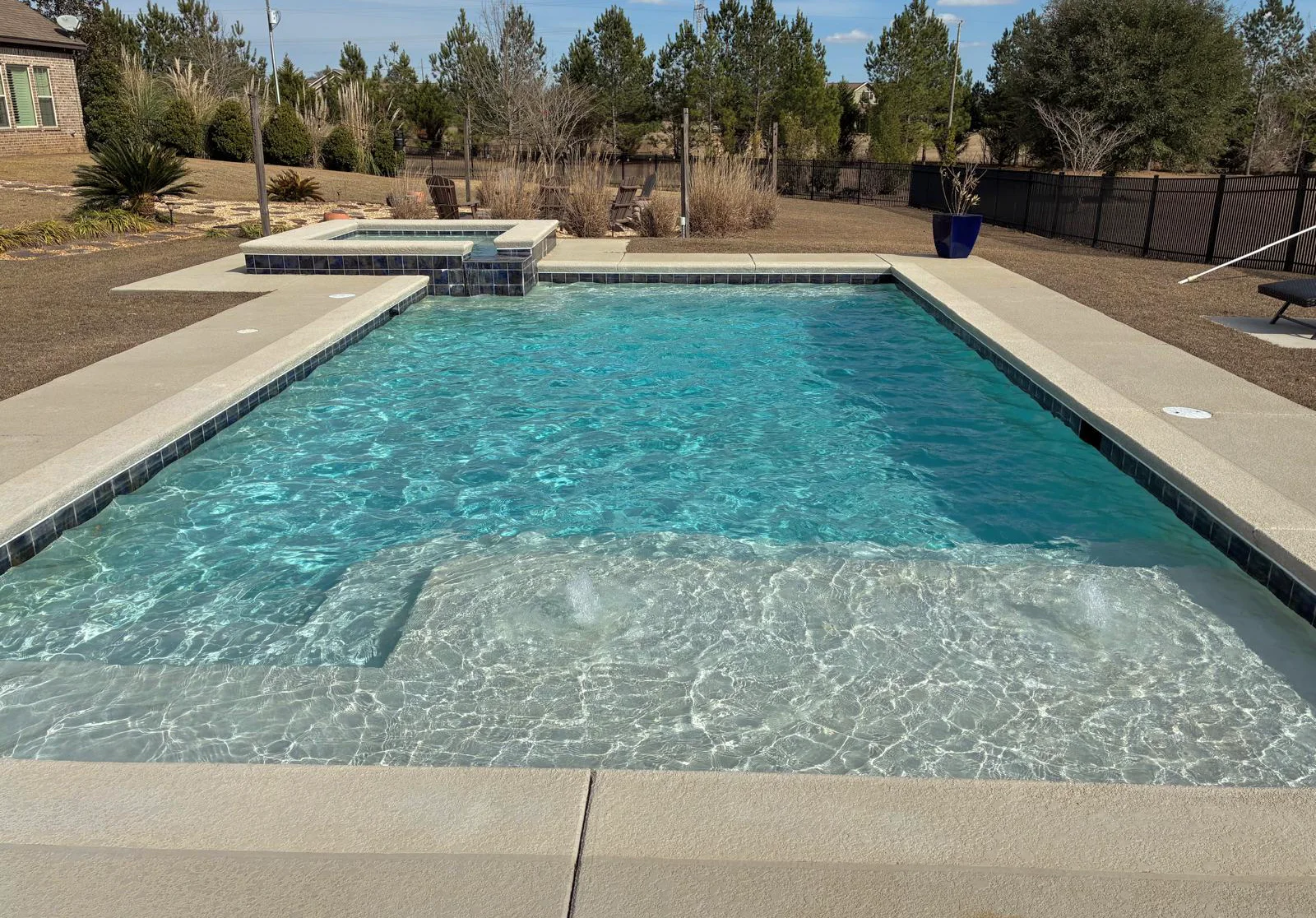
In short: plaster costs the least and feels the smoothest, pebble lasts the longest and has the most texture, and quartz sits in between on all three. The rest of this guide explains where each one makes sense for a concrete pool on the Gulf Coast, with the numbers behind each claim.
What is the difference between plaster, quartz and pebble?
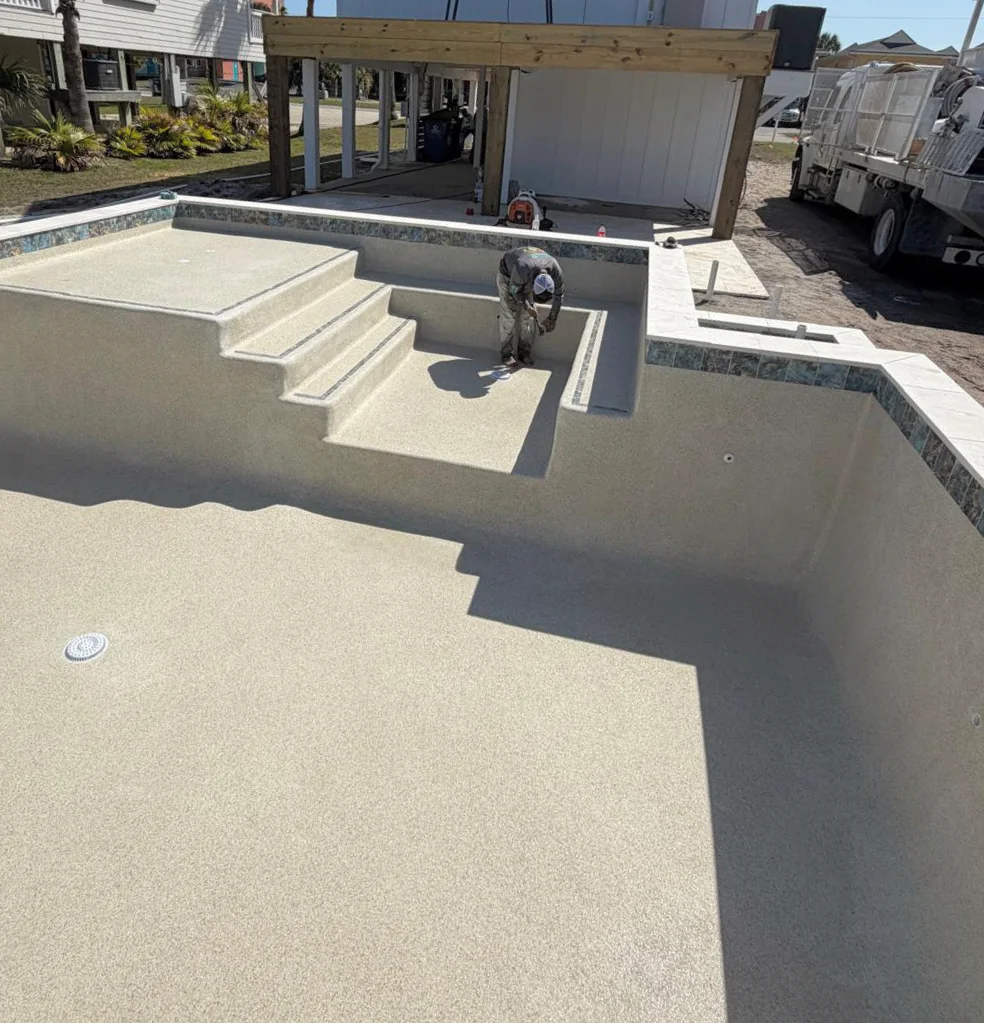
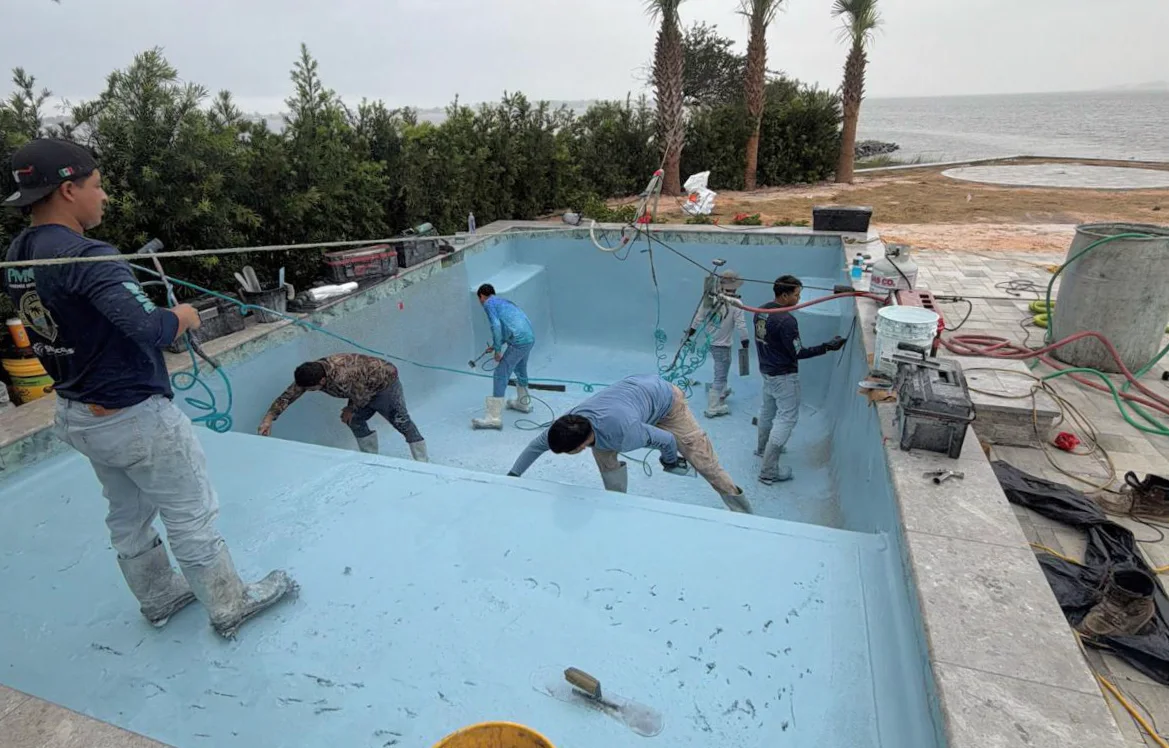
All three are troweled by hand over the gunite or shotcrete shell. The National Plasterers Council (NPC), the trade group for cement pool finishes, sets an average minimum thickness of 3/8 inch and an average maximum of 3/4 inch for these coatings. What changes from one to the next is the aggregate inside the cement.
- Plaster (marcite). Finish maker SGM describes traditional plaster as white Portland cement, marble dust and water. It is hard-troweled to a smooth surface. Colored plaster adds pigment to the same base.
- Quartz. Cement blended with natural and colored quartz grains. SGM puts the quartz content of colored quartz finishes at 20 to 40 percent of the mix, and NPT, which makes the QuartzScapes line, states that natural quartz is ten times harder and more durable than marble.
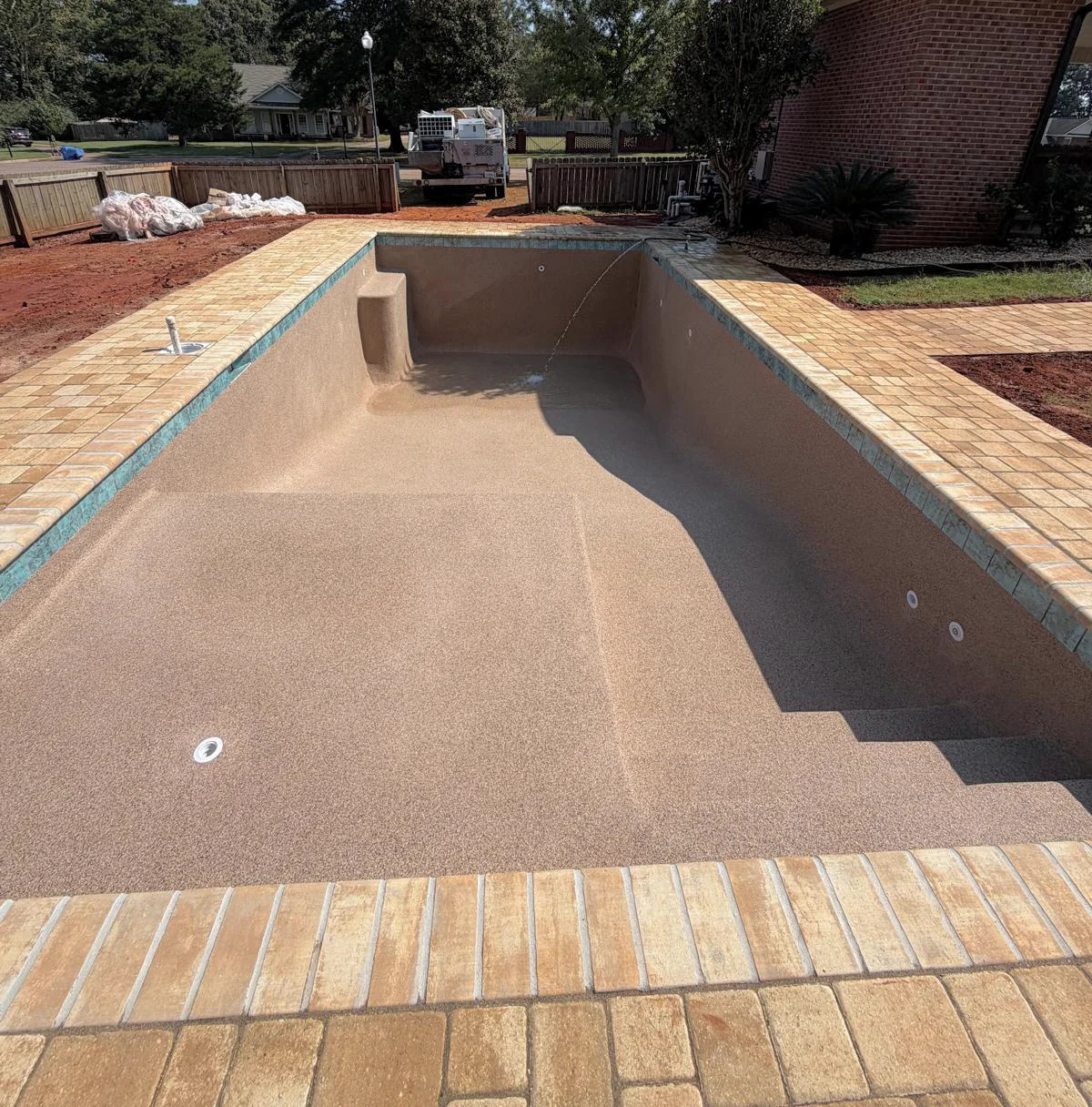
- Pebble. Cement with small, rounded natural stones. After troweling, the top film of cement is removed so the stones stand slightly proud of the surface. The NPC notes that exposed-aggregate finishes are judged by texture, not smoothness, for exactly this reason. Examples include NPT’s StoneScapes and PebbleTec, which HomeGuide calls the most popular brand of pebble finish.
Because all three are cement at heart, all three depend on balanced water. That point comes back below, because it matters more in Northwest Florida than in many other places.
How much does each finish cost, and how long does it last?
Here are the national reference numbers side by side. The last column is our own simple math on HomeGuide’s ranges, not a HomeGuide figure: the midpoint of the cost range divided by the midpoint of the life range.
| Finish | Cost per sq ft (HomeGuide 2025) | Cost for 1,000 sq ft of surface | Typical life (HomeGuide 2025) | Typical life (SGM) | Rough cost per year of life* |
|---|---|---|---|---|---|
| Standard plaster (marcite) | $6 to $8 | $6,000 to $8,000 | 7 to 12 years | 5 to 10 years | about $740 |
| Quartz plaster | $7 to $10 | $7,000 to $10,000 | 10 to 15 years | 12 to 18 years | about $680 |
| Pebble | $7 to $15 | $7,000 to $15,000 | 15 to 20+ years | 15 to 20 years | about $630 |
*Our calculation, for 1,000 sq ft of surface: $7,000 over 9.5 years, $8,500 over 12.5 years and $11,000 over 17.5 years. For pebble, HomeGuide’s open-ended “20+” is counted as 20. These are illustrations, not quotes.
Two things stand out. First, the sources do not agree exactly on life span, and the NPC itself says plaster can last up to 20 years with proper care. The spread comes from water chemistry and workmanship, not from the material alone. Second, pebble costs more on day one but can cost less per year if it reaches its expected life.
HomeGuide also notes that its prices cover the resurfacing only, not refilling the pool afterward. Your own number depends on the pool’s size, the condition of the shell and the finish you pick, and it is set at the site visit. For the full cost breakdown, see our guide to pool resurfacing cost by finish and pool size.
Where does quartz beat plaster, and where does it not?
On HomeGuide’s numbers, moving from standard plaster to quartz adds about three years of typical life (10 to 15 years instead of 7 to 12) for $1 to $2 more per square foot. SGM’s comparison guide adds that plaster tends to show etching and staining sooner, while quartz and pebble resist wear and hold color longer, and it ranks quartz first of the three families for range of colors and effects. NPT’s online finish catalog, for example, listed 24 QuartzScapes colors across its Regular, Caribbean and Tropical series on November 25, 2026; NPT’s older guide to its finish lines still says 18.
Where quartz does not beat plaster is smoothness and upfront price. SGM ranks plaster as the smoothest and most comfortable of the three surfaces, with quartz next: smooth, but with a slight texture. And quartz is still cement. The NPC’s technical bulletin on color loss explains that water left in an aggressive condition can leach pigment out of a cement finish up to 1/8 inch deep, and that the color loss is irreversible. A colored quartz finish is not immune to that.
If you want white water and a tight budget, plaster is a reasonable choice. If you want color, a bit more life and you plan to keep the pool for a while, quartz is usually the step up. Our quartz pool plaster page covers the Quartz series we apply.
When does pebble make the most sense?
Pebble earns its price when you plan to keep the pool for a long time. HomeGuide gives it the longest life of the cement finishes, and SGM credits the natural stone with resisting chemical attack and wear, along with better slip resistance on steps and benches.
The trade-offs are texture and cost. NPT says the stones in its Regular pebble are smooth but can still be felt by hand or foot, and SGM lists texture and gradual aggregate loss as the main drawbacks. Pebble also has the widest price range, $7 to $15 per square foot, because the brand, the pebble size and any glass add-ins all move the price.
Pebble size changes the feel. NPT’s StoneScapes comes in Micro, Mini and Regular sizes; NPT calls Micro its smoothest pebble and says Mini has been its most popular size for over 15 years. If you like the look of pebble but worry about bare feet, a smaller size is the usual answer. We cover that in detail in our guide to StoneScapes Mini Pebble and in the pros and cons of a pebble pool finish.
How does each finish feel underfoot?
Feel is personal, but there are useful reference points.
- Plaster: The NPC describes a properly hard-troweled plaster surface as no rougher than very fine sandpaper, 220-grit or finer, like an eggshell. The same NPC guidance warns that steps and benches should not be overly smooth, to avoid slipping.
- Quartz: Smooth with a slight texture, per SGM. As any cement finish ages and etches, it gets rougher.
- Pebble: Textured, and the texture depends on the stone size. Smaller pebbles feel softer; larger pebbles give more grip and more of a river-bottom look.
The surest test is your own hand and foot on a real sample. We bring samples to the site for that reason.
Which finish handles Gulf Coast water best?
Here is the local factor most comparisons skip. A 1986 U.S. Geological Survey report says Pensacola and the surrounding area draw municipal water from the sand-and-gravel aquifer, and that the water in that aquifer generally has hardness below 10 mg/L and is slightly acidic. The same report classifies anything under 60 mg/L as soft. Keep in mind what that number describes: raw water in the aquifer, before any treatment by the utility, not a reading of what comes out of your tap today.
Cement finishes want the opposite. The NPC’s start-up card sets a calcium hardness of 200 to 400 ppm and a pH of 7.2 to 7.6 for daily maintenance after the first 28 days. The NPC’s color-loss bulletin defines aggressive water as water with low calcium hardness, low pH, low alkalinity or a mix of these, and says it can dissolve parts of the cement surface.
What that means in practice:
- No cement finish is immune. Plaster, quartz and pebble all have a cement binder that aggressive water can attack.
- Plaster is the most sensitive. SGM ranks plaster as the most sensitive to chemistry imbalances and pebble as the least.
- Test your own fill water. What comes out of the hose depends on your utility or your well, and the NPC start-up card itself calls for testing fill water for pH, alkalinity, calcium hardness and metals. The NPC’s White Paper 7 (August 2025), its most recent guidance on the subject, recommends fill water above 200 ppm calcium hardness for a new cement finish. Test before you fill, and keep calcium in range afterward.
Water in other parts of our service area, from Alabama to the Mississippi coast, can be quite different, so the rule is the same everywhere: test, then balance.
How do you choose?
A simple way to narrow it down:
- Choose plaster if budget comes first, you like classic light blue water and you will keep the chemistry tight.
- Choose quartz if you want a colored finish, a few more years of life and a surface that still feels close to smooth.
- Choose pebble or Mini Pebble if you want the longest life, a natural stone look and textured steps, and you are comfortable with a higher upfront cost.
We apply Quartz series, Mini Pebble, Mini Pebble with glass and regular Pebble finishes, including StoneScapes, during pool resurfacing and on new pools for builders. See our pebble pool finish page for the stone options. Every job starts with a site visit and a written estimate, because the shell’s condition decides as much as the finish you pick.
If you are in Pensacola, Alabama or the Mississippi Gulf Coast and want a second opinion on your pool, request an estimate.
Sources
- How much does pool resurfacing cost?, HomeGuide, accessed November 25, 2026.
- Interior Finish Tolerances, National Plasterers Council, accessed November 25, 2026.
- Pool Plaster FAQ, National Plasterers Council, accessed November 25, 2026.
- Tech Bulletin 4: The Most Common Reasons for Loss of Color, National Plasterers Council, accessed November 25, 2026.
- NPC Pool Start-up Card (REV 03-2021), National Plasterers Council (hosted by NPT), accessed November 25, 2026.
- NPT’s Pool Finishes: Understanding the Different Types, NPT, accessed November 25, 2026.
- Colored Quartz vs. Pebble vs. Plaster: Pool Finish Comparison Guide, SGM, accessed November 25, 2026.
- Water for Florida Cities (Water-Resources Investigations Report 86-4122), U.S. Geological Survey, accessed November 25, 2026.