Pool finishes · · 7 min read
Pool Plaster Colors: What Each One Does to Your Water Color
White plaster gives light blue water, and NPT's 10 PlasterScapes colors add grays, blues and greens. See a pool plaster color chart and how to choose.
By Outdoor Hardscapes Pool Finishes, pool finishing contractor in Pensacola, FL.
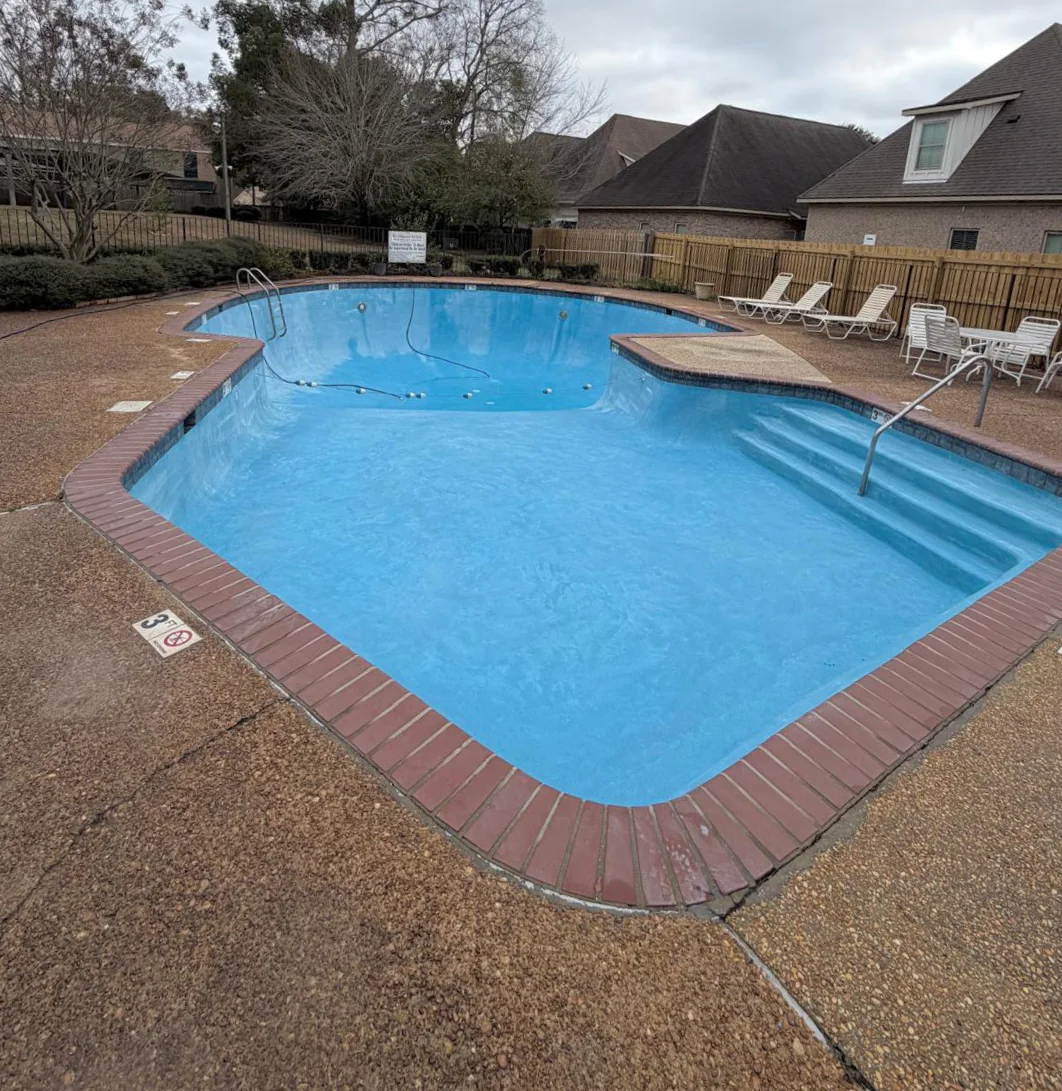
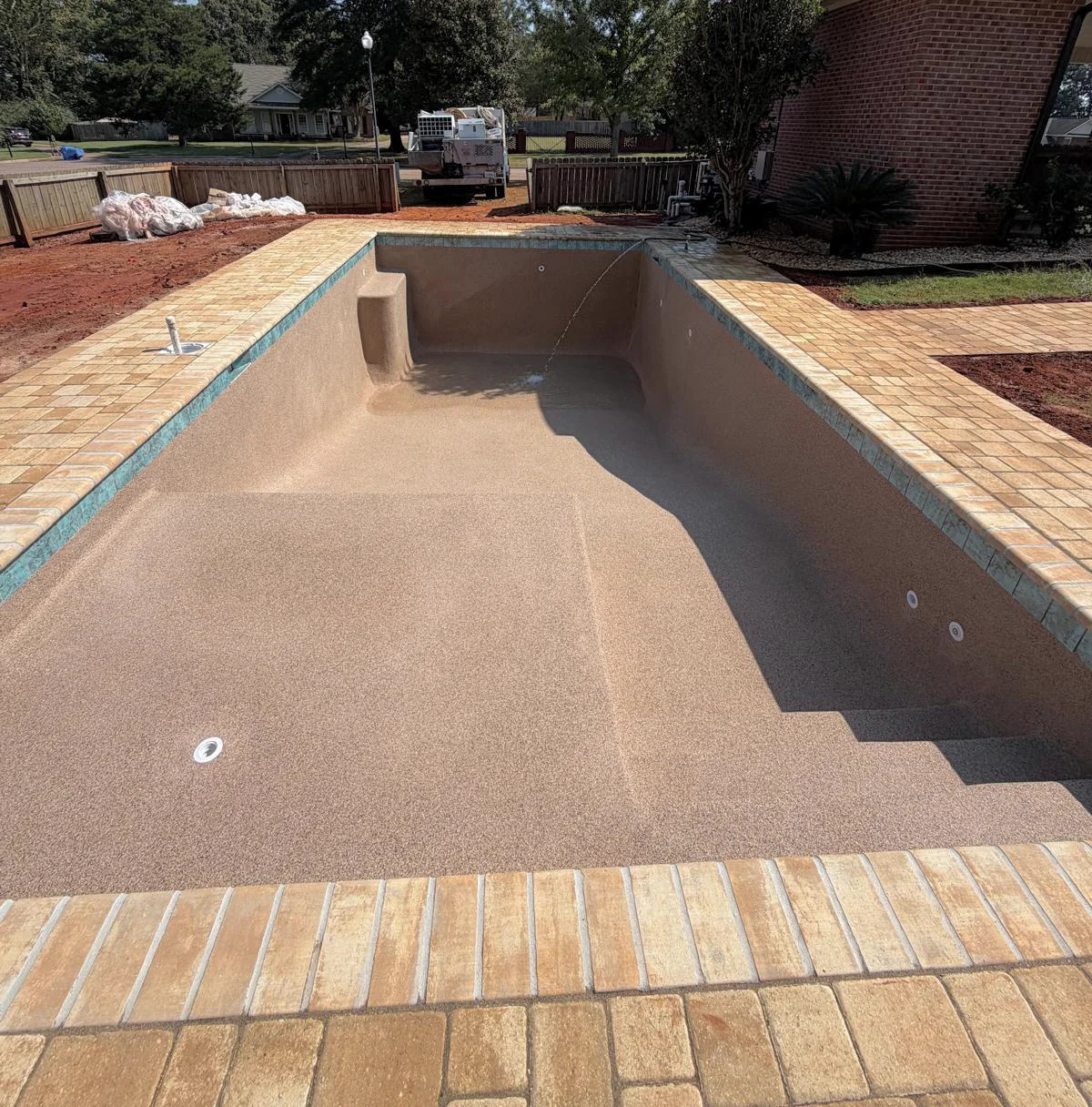
White is the traditional pool plaster color, and it gives the light blue water most people picture when they think of a pool. According to the National Plasterers Council, plaster is the most common type of pool finish. Colored plaster is the same white cement and marble mix with pigment added: NPT’s PlasterScapes pigment line, for example, comes in 10 colors, from Sky Blue to Deep Stormy Seas, and NPT says its light gray Stormy Seas has been the top seller year in and year out.
The color you pick for the plaster is really a choice of water color. This guide covers how that works, what the common plaster colors do to the water, and what to expect from colored plaster over time.
Why does the finish color change the water color?
Clean water is not really clear. NOAA explains that water absorbs colors in the red part of the spectrum, which leaves the blue part for us to see. In a pool, light passes through the water, bounces off the finish and comes back to your eye, so the finish acts like the canvas under that natural blue.
Finish maker SGM describes the effect simply: smooth, light finishes reflect more light and make the water look brighter, while darker or textured finishes absorb more light and make the water look deeper and richer. Depth adds to it. Deeper water looks more saturated because the light travels farther through it, which is why the same plaster looks paler on the steps than in the deep end.
The sky and the yard play a part too. SGM notes that blue skies push the water toward blue, gray skies mute it, and green landscaping can add a green tint. Two pools with the same plaster can look different for those reasons alone.
What does a pool plaster color chart look like?
Here is a chart built from NPT’s own product pages for its PlasterScapes pigments, which are used in traditional white cement and marble plaster. The “Deep” versions use double the pigment of the base color, according to NPT.
| PlasterScapes color | Pigment strength | Water color NPT lists |
|---|---|---|
| Sky Blue | 1x | Light blue |
| Deep Sky Blue | 2x | Medium blue |
| Blue Harbor | 1x | Medium blue |
| Deep Blue Harbor | 2x | Dark blue |
| Stormy Seas | 1x | Light gray |
| Deep Stormy Seas | 2x | Dark blue |
| Turquoise | 1x | Light green |
| Deep Turquoise | 2x | Green |
| Seafoam Green | 1x | Light green |
| Deep Seafoam Green | 2x | Green |
Two patterns are worth noticing. Doubling the pigment moves the water one or two steps darker. And gray plaster does not always make gray water: NPT rates Stormy Seas for light gray water but its Deep version for dark blue.
If you want more color choices or more durability than plain plaster, quartz and pebble finishes have their own palettes. NPT’s online catalog listed 24 QuartzScapes quartz colors across its Regular, Caribbean and Tropical series on November 25, 2026 (its older guide to its finish lines says 18), for example, and its StoneScapes Mini Pebble line has its own range, which we cover in our guide to StoneScapes Mini Pebble.
Is white pool plaster still a good choice?
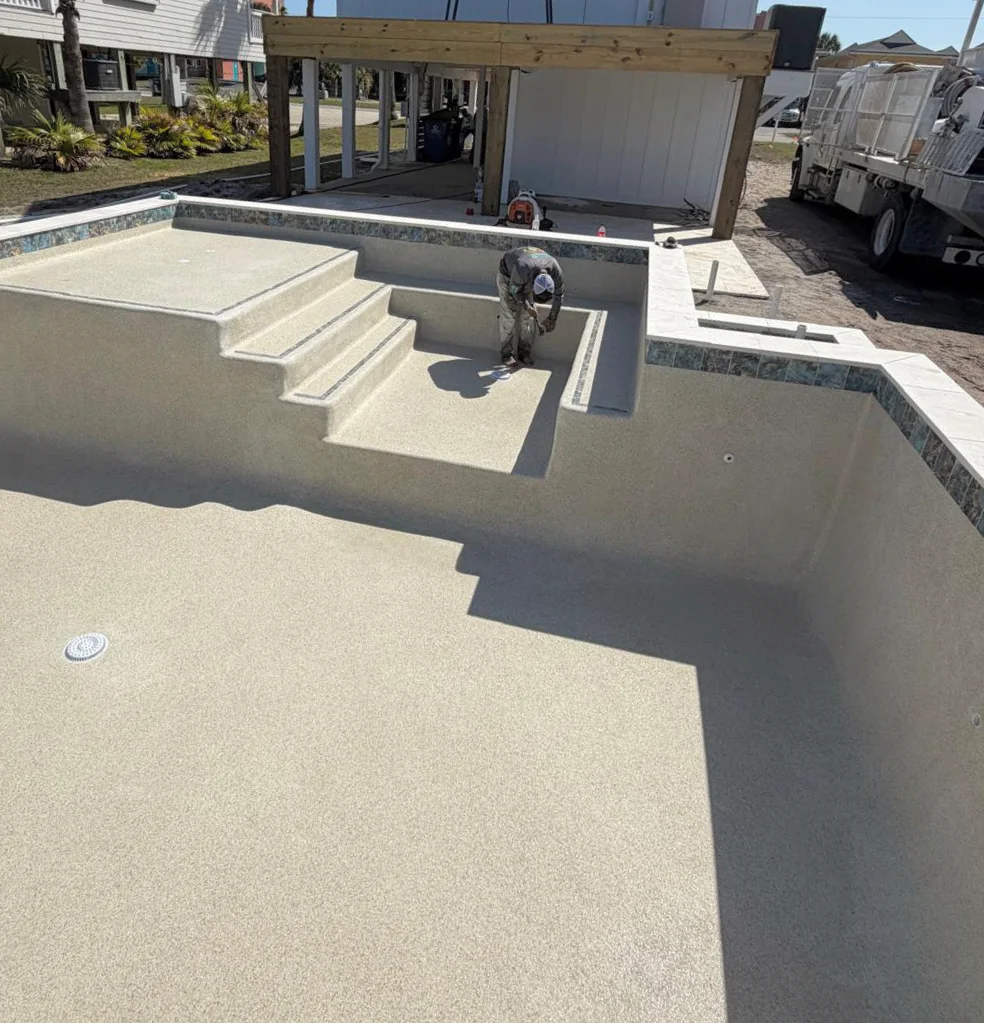
For many pools, yes. SGM describes white plaster as giving the clearest-looking water, with the shallow end nearly clear and the deep end a medium blue. White also makes depth easy to read, because the contrast between shallow and deep is strong.
The trade-off is that white shows everything. SGM points out that debris, stains and algae show up right away on a white finish. That is good for keeping the pool clean and less good if your pool sits under trees or your water has metals that stain. Our guide to pool stains by color explains what different stain colors usually mean.
White-based stone finishes behave the same way. NPT rates its White Mini pebble and its QuartzScapes Ivory quartz for light blue water, the same family of color as white plaster.
What is French grey pool plaster?
“French grey” (NPT spells it French Gray) is a light gray finish that makes the water look cooler and more modern than white. NPT sells a French Gray in its QuartzScapes quartz and StoneScapes pebble lines; its PlasterScapes pigments have no French Gray, and the closest plaster shade is the light gray Stormy Seas.
NPT’s examples show how much the result depends on the line:
- PlasterScapes Stormy Seas: light gray pigmented plaster, rated for light gray water.
- QuartzScapes French Gray: French gray pigmented cement with quartz, rated for light gray water.
- StoneScapes French Gray Mini: French gray pigmented cement with black and white pebbles, rated for light gray to medium blue water.
As the French Gray Mini rating shows, a gray finish can read anywhere from gray to blue depending on depth and light, which is why we always suggest looking at the sample wet and outdoors.
Why does colored plaster never look perfectly even?
This is the part many pool owners are not told. The NPC’s standard interior finish disclosure says that normal color variation, called mottling, is expected in cement pool finishes. Humidity, temperature and the condition of the surface during installation all cause it, and the NPC does not treat it as a defect.
The same disclosure goes further. It says a pool finish may not be even in color or the exact shade you expected, and that the shade of pigmented surfaces will vary and fade over time. Hairline crazing can also be more visible on colored finishes.
Water chemistry decides how fast that fading happens. The NPC’s color-loss bulletin explains that water kept in an aggressive condition, meaning low calcium hardness, low pH or low alkalinity, can leach pigment out of the surface up to 1/8 inch deep, and that this loss is irreversible. If your fill water is soft, keeping calcium in range is part of protecting the color. Our quartz pool plaster page covers the Quartz series we apply.
What changes with a dark finish?
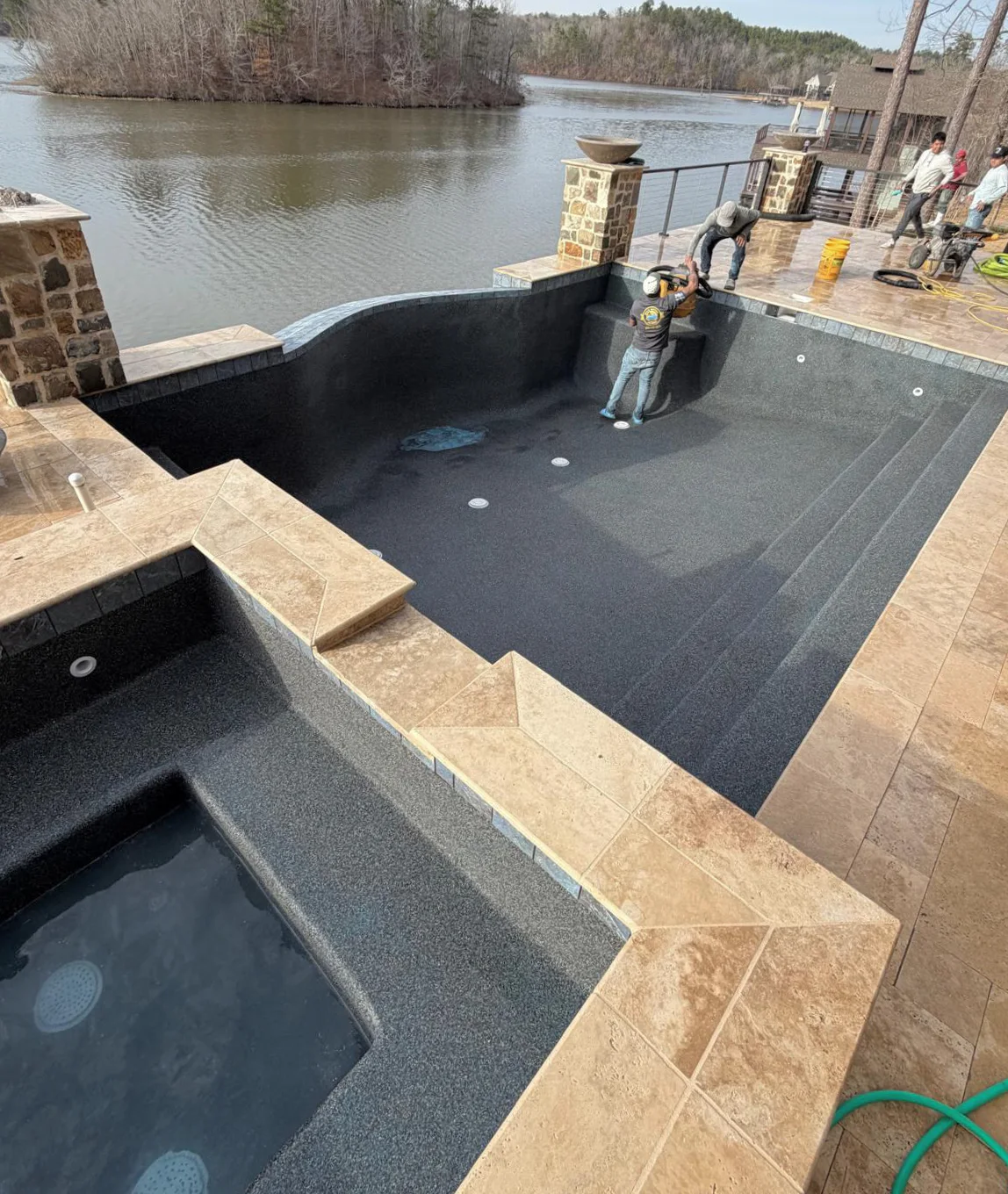
Dark plaster and dark pebble finishes look dramatic and reflect the sky and the landscape like a mirror. Wet Edge Technologies, a finish maker, notes that the exact hue of a dark finish is hard to predict because it depends so much on the surroundings, ranging from green-blue to blue-black.
There are three practical trade-offs:
- Scale shows more. Wet Edge says scale buildup can be very noticeable on a dark finish when the water chemistry drifts, much like dust on a black car.
- The water may run warmer, by the maker’s account. In a 2016 post, Wet Edge says dark finishes can make the water a few degrees warmer than light ones. Neither Wet Edge nor any other manufacturer we checked publishes a measured figure, so treat it as the maker’s claim, not a number to plan around.
- Extra warmth is not always a plus here. The National Weather Service in Mobile reported that Pensacola’s average high in July 2025 was 92.5°F, 0.9 degrees above the 1991 to 2020 normal. Wet Edge itself presents the warmer water as an advantage to some owners and a disadvantage to others, depending on the climate.
How should you judge a color sample?
The NPC recommends judging a finished pool only when it is full of water and under natural light. A few habits help when you choose:
- Look at samples wet and outdoors in daylight. The NPC notes that color variation can look more pronounced on a cloudy day or at night under the pool light.
- Hold the sample next to your coping and waterline tile, because the edge of the pool frames the water color.
- Remember that depth deepens color. The steps will look lighter than the sample; the deep end, darker.
We bring samples of the finishes we apply to the site so you can do exactly this before you decide. If you are still choosing between plaster and a stone finish, see our comparison of plaster vs quartz vs pebble and our pebble pool finish options.
If you are in Pensacola, Alabama or the Mississippi Gulf Coast and want a second opinion on your pool, request an estimate.
Sources
- Pool Plaster FAQ, National Plasterers Council, accessed November 25, 2026.
- Tech Bulletin 4: The Most Common Reasons for Loss of Color, National Plasterers Council, accessed November 25, 2026.
- NPT’s Pool Finishes: Understanding the Different Types, NPT, accessed November 25, 2026.
- All Pool Finishes (PlasterScapes, QuartzScapes and StoneScapes color pages), NPT, accessed November 25, 2026.
- Why is the ocean blue?, NOAA National Ocean Service, accessed November 25, 2026.
- How Pool Finishes Affect Water Color, SGM, accessed November 25, 2026.
- Dark Color Pool Finishes, Wet Edge Technologies, accessed November 25, 2026.
- July 2025 Climate Summaries Mobile/Pensacola, National Weather Service Mobile, accessed November 25, 2026.