Pool finishes · · 8 min read
Pebble Pool Finish Pros and Cons: Cost, Life Span and Feel
A pebble pool finish lasts 15 to 20+ years per HomeGuide, versus 7 to 12 for plaster, but costs more and feels textured. Weigh the real pros and cons.
By Outdoor Hardscapes Pool Finishes, pool finishing contractor in Pensacola, FL.
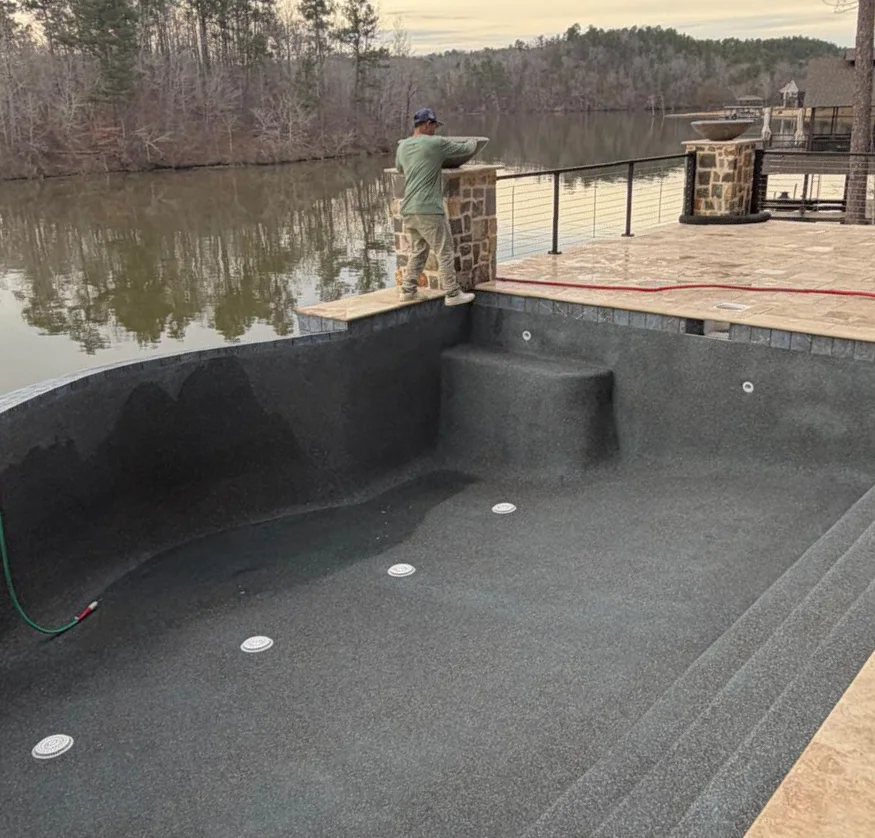
A pebble pool finish trades a higher upfront price for a longer life. National cost guides such as HomeGuide (2025) put pebble resurfacing at $7 to $15 per square foot with a 15 to 20+ year life, against $6 to $8 and 7 to 12 years for standard plaster.
The downsides are a bigger bill on day one, a textured feel underfoot and a few habits that matter more than with plaster. Here are the real pros and cons, the numbers behind them, and how pebble behaves in Gulf Coast water.
What do you gain with a pebble finish?
A longer service life. Pebble has the longest typical life of the common cement finishes in HomeGuide’s guide, and HomeGuide’s separate Pebble Tec guide says that brand can last 25 years or more.
Stone that resists wear. A pebble finish is natural stone held in cement. Finish maker SGM credits the stones with resisting chemical attack and physical wear, and ranks pebble as the least sensitive of the three main finish families to swings in water chemistry, with plaster the most sensitive.
Better at hiding small stains. SGM notes that the dense stones resist discoloration and help mask minor staining in the cement around them. A white plaster pool shows every mark; a pebble pool hides many of them.
Grip on steps and benches. SGM rates pebble first for slip resistance and traction, which matters on steps, sun shelves and the shallow end.
A natural look. The mix of stone colors and sizes gives a river-bottom or lagoon look, and SGM notes the color range is wide.
What are the drawbacks?
Higher upfront cost. SGM estimates pebble at 40 to 70 percent more than basic plaster. HomeGuide’s ranges tell the same story, and branded lines run higher still: HomeGuide puts Pebble Tec at $10 to $20 per square foot.
Texture underfoot. Some swimmers love it and some do not. SGM lists texture as a main drawback for people with sensitive skin, and NPT describes its largest pebbles as smooth stones you can still feel by hand or foot.
Some stones come loose. PebbleTec tells owners that a small loss of pebbles or glass beads during start-up is normal, usually in the first few weeks. Over the years, SGM says, stones gradually work loose from the cement; heavy loss is one of the signs HomeGuide lists that a pool needs resurfacing.
Natural variation. PebbleTec states that aggregate finishes naturally vary in color, shade, consistency and exposure. The National Plasterers Council (NPC) also treats variation in how densely the stones sit across the surface as normal, not a defect. If you want a perfectly uniform look, pebble is not it.
More brushing. The uneven surface can trap debris and algae, and SGM says pebble may need more frequent brushing than plaster or quartz.
Care with stain removal. Cost guide HomeGuide, in its Pebble Tec guide, says acid washing that brand is not recommended because it can harm the surface, and suggests a chlorine wash or power wash followed by a stain remover instead. That is HomeGuide’s advice, not a manufacturer instruction; we did not find an acid-wash instruction on the Pebble Technology or NPT pages we checked. Before anyone acid washes a pebble pool, ask the applicator which method suits that specific finish, and leave acid work to a professional.
How do pebble and plaster compare in numbers?
| Factor | Pebble | Standard plaster | Source |
|---|---|---|---|
| Cost per sq ft | $7 to $15 | $6 to $8 | HomeGuide (2025) |
| Cost for 1,000 sq ft of surface | $7,000 to $15,000 | $6,000 to $8,000 | HomeGuide (2025) |
| Typical life | 15 to 20+ years | 7 to 12 years | HomeGuide (2025) |
| Rough cost per year of life* | about $630 | about $740 | Our midpoint math on HomeGuide ranges |
| Branded example | Pebble Tec at $10 to $20 per sq ft | Not applicable | HomeGuide Pebble Tec guide (2025) |
| Days before judging final color | about 28 | Not covered here | PebbleTec care instructions |
*Our calculation, for 1,000 sq ft of surface: $11,000 over 17.5 years for pebble and $7,000 over 9.5 years for plaster, with HomeGuide’s open-ended “20+” counted as 20. An illustration, not a quote.
On that math, pebble comes out ahead for owners who keep the pool long enough, and finish maker SGM reaches the same conclusion, ranking pebble best on cost per year because of its longer life. It only works if the finish reaches its expected life, which depends on the water and the start-up. Your own price depends on the pool’s size, the shell and the product, and it is set at a site visit. Our guide to pool resurfacing cost breaks the full project down.
Which pebble sizes are on the market?
“Pebble” is a family, not one product, and stone size changes the feel more than anything else.
- PebbleTec (original finish). Pebble Technology International’s original line. HomeGuide describes it as the large-pebble option with a natural, earthy texture.
- PebbleSheen. PebbleTec says it is its most popular finish, using a blend of slightly smaller pebbles for a more refined texture.
- PebbleFina. HomeGuide calls it the smoothest Pebble Tec finish, made with finely ground pebbles, at a higher price tier.
- StoneScapes Micro, Mini and Regular. NPT’s pebble line in three sizes. NPT calls Micro its smoothest, Regular its biggest, and says Mini has been its most popular size for over 15 years.
PebbleTec-branded finishes are applied by that company’s own authorized builders and installers, according to HomeGuide. We apply Mini Pebble, Mini Pebble with glass and regular Pebble finishes, including StoneScapes, along with Quartz series finishes. For colors and details on the most popular size, see our guide to StoneScapes Mini Pebble, and our pebble pool finish page for what we install.
Who should choose pebble, and who should skip it?
Pebble usually makes sense if:
- You plan to keep the pool for many years, long enough for the per-year math to pay off.
- You like a natural stone look and want more grip on steps and benches.
- You would rather hide small stains than see every mark on a white floor.
- You are willing to brush more in the first weeks and keep the water tested.
Plaster or quartz may suit you better if:
- This year’s budget matters more than the long run, or you plan to sell soon.
- The pool is used mostly for laps. SGM notes that heavy swimming use favors smooth quartz or plaster surfaces.
- Someone in the house has sensitive skin and wants the smoothest possible floor.
- You want the classic light blue water of white plaster and a uniform look.
A middle path is a smaller pebble size. Mini or Micro pebble keeps the stone look with a softer feel, and NPT says Mini has been its most popular pebble size for over 15 years.
Is pebble a good fit for Gulf Coast pools?
It can be, with one condition: the water has to stay balanced. A 1986 U.S. Geological Survey report says the water in the sand-and-gravel aquifer that supplies Pensacola generally has hardness under 10 mg/L and is slightly acidic. That is raw aquifer water, not a reading of what comes out of your tap after utility treatment. But if pool water stays that low in calcium or pH, it fits what the NPC calls aggressive: water with low calcium hardness, low pH or low alkalinity that can dissolve parts of a cement surface.
The pebbles are stone, but the cement that holds them is not. If the binder erodes, stones loosen. That is why calcium matters even on a pebble pool, and why PebbleTec tells owners not to fill a new finish with soft water, such as water from a hose bib tied to a water softener, until the finish has cured. The NPC’s White Paper 7 (August 2025), written for cement finishes in general, puts a number on it: fill water above 200 ppm calcium hardness. Hot weather adds to the load too; SGM notes that chemical demand rises in hot climates.
The practical answer: test your fill water before the pool is filled, raise calcium as the pool fills if the water is soft, and keep testing afterward. Pool chemicals, especially acid, carry real hazards, so follow the label and safety data sheet, or have a professional handle the chemistry.
What does a new pebble finish need in the first weeks?
PebbleTec’s care instructions for its finishes give a clear picture of the first month:
- Brush three times a day for the first 3 days, then twice a day for the next 10 days, with a nylon brush.
- Wait at least 14 days before heating the water.
- Wait at least 28 days before adding salt if you use a salt chlorine generator.
- Allow about 28 days before judging the final water and finish color, because both change during start-up.
Other makers publish their own start-up steps, and the applicator should give you the one that matches your finish. For comparison, the NPC’s 2025 White Paper 6, written for cement finishes in general, says to keep the heater off for 28 days and to follow the manufacturer’s instructions for proprietary finishes. If you are still deciding between finishes, our comparison of plaster vs quartz vs pebble covers all three, and our pool resurfacing page explains how a resurfacing job runs.
If you are in Pensacola, Alabama or the Mississippi Gulf Coast and want a second opinion on your pool, request an estimate.
Sources
- How much does pool resurfacing cost?, HomeGuide, accessed November 25, 2026.
- How much does a Pebble Tec pool cost?, HomeGuide, accessed November 25, 2026.
- PebbleSheen Pool Finish, Pebble Technology International, accessed November 25, 2026.
- Pool Care Instructions, Pebble Technology International, accessed November 25, 2026.
- Colored Quartz vs. Pebble vs. Plaster: Pool Finish Comparison Guide, SGM, accessed November 25, 2026.
- NPT’s Pool Finishes: Understanding the Different Types, NPT, accessed November 25, 2026.
- Tech Bulletin 4: The Most Common Reasons for Loss of Color, National Plasterers Council, accessed November 25, 2026.
- Water for Florida Cities (Water-Resources Investigations Report 86-4122), U.S. Geological Survey, accessed November 25, 2026.