Pool care · · 8 min read
Pool Acid Wash Guide: When It Helps, Risks, Cost and Frequency
A pool acid wash costs $300 to $700 per HomeGuide and strips a thin layer of plaster each time. When it helps, how often to do it and safer alternatives.
By Outdoor Hardscapes Pool Finishes, pool finishing contractor in Pensacola, FL.
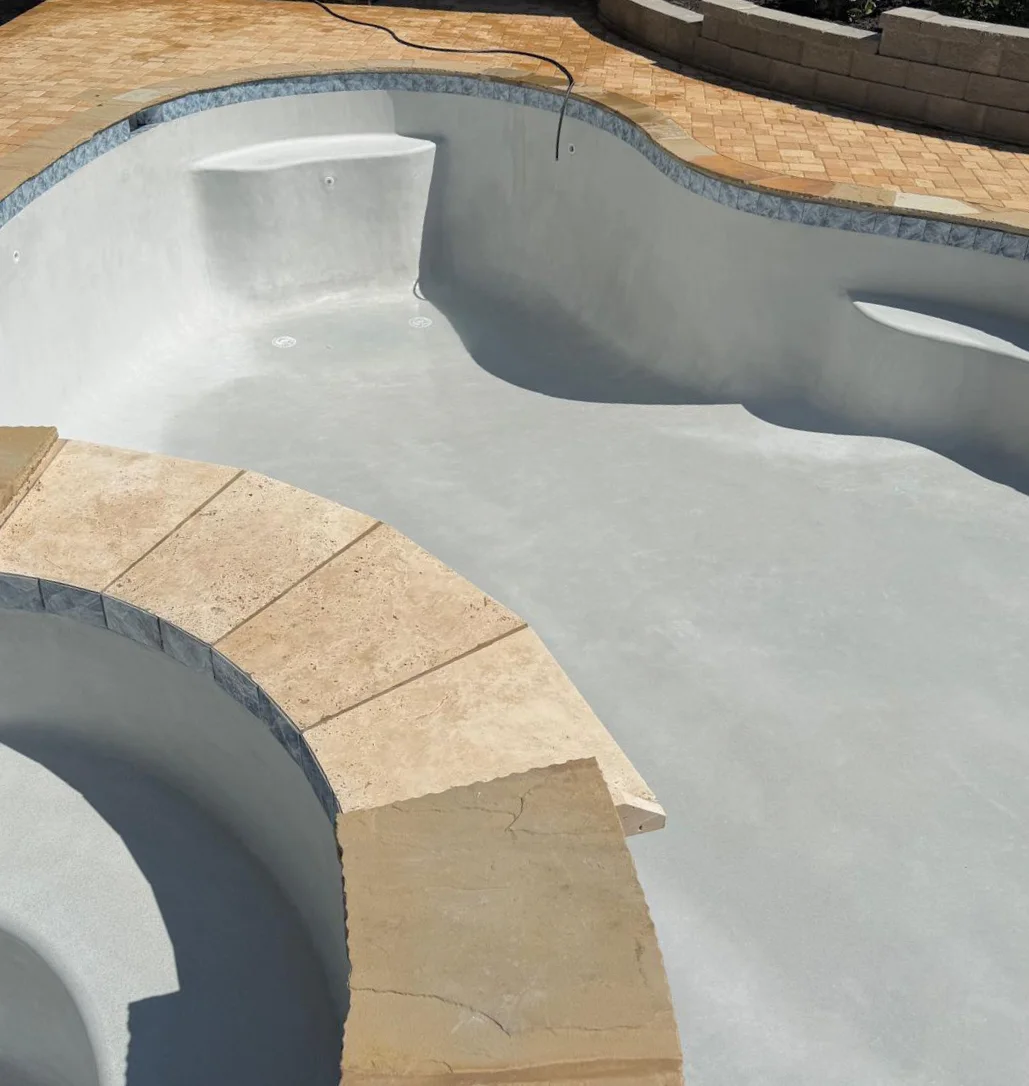
A pool acid wash strips a thin layer of plaster so the stains and scale in it go too, and national cost guides such as HomeGuide (July 2025) put it at $300 to $700 for most residential pools, with a $450 average. The catch is that the plaster does not grow back. PoolDial, a pool service software company, estimates each wash removes about 1/16 inch and says standard white plaster can typically handle 3 to 4 washes in its lifetime. That makes an acid wash a targeted fix for specific problems, not routine maintenance.
This guide covers when an acid wash is the right call, what it costs, how often a pool can take one and why it is a professional job. It does not walk through the procedure: the acid is dangerous and the mistakes are permanent.
What does a pool acid wash actually do?
The National Plasterers Council (NPC) glossary defines an acid wash as cleaning a cement-based interior finish by dissolving the material on its surface to remove efflorescence, dirt or other unwanted stains. The same glossary also uses the term for a low-strength, diluted acid solution that removes certain stains with little, if any, of the surface compromised. In the glossary’s own wording, acid strength is what separates the two.
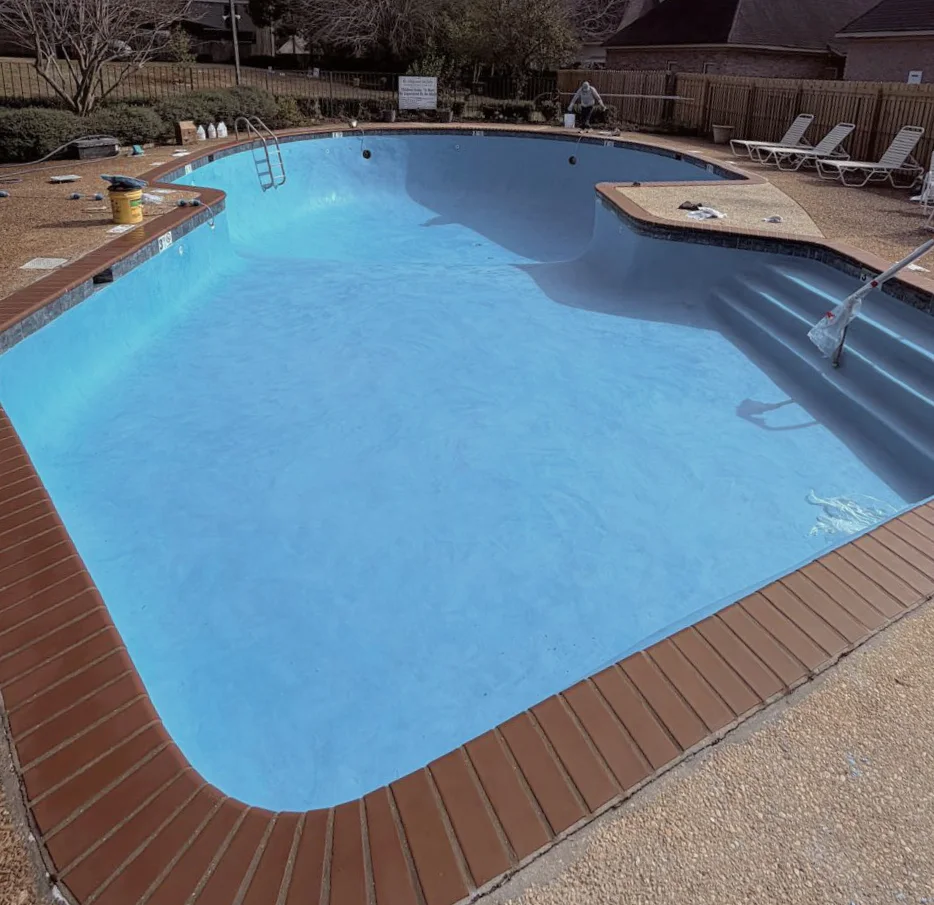
In the common version, the pool is drained and the interior surface is treated with muriatic acid, which is hydrochloric acid, mixed with water. HomeGuide says the treatment strips a very thin layer of plaster, concrete, gunite or aggregate surface, taking embedded stains, algae residue, mineral deposits and discoloration with it, and can restore roughly 70 to 80% of a pool’s original brightness.
When does an acid wash help, and when is something else better?
An acid wash helps when the problem lives in the top skin of the plaster and the plaster has thickness to spare. It does not fix problems that come from inside the shell or from surface that is already gone. Here is how common situations sort out:
| Situation | Better approach | Number to know | Source |
|---|---|---|---|
| Algae or leaf stains | Chlorine wash or chlorine and brushing, no plaster removed | Chlorine wash $300 to $500 | Fixr, January 2025; PoolDial |
| Stubborn stains or scale that chemical treatment did not lift, plaster in good shape | Acid wash can help | About 1/16 inch of plaster per wash (industry estimate) | PoolDial |
| Plaster that has already had 3 or more washes | Resurface instead | 3 to 4 washes per plaster lifetime (industry estimate) | PoolDial |
| Plaster older than 15 to 20 years, rough, spalling or delaminating | Resurface instead | 15 to 20 years | PoolDial |
| Old finish removed, shell ready for new plaster | Acid wash and neutralize as surface prep | New coat at least 3/8 inch thick | City of Gulf Shores, AL, 2016 public pool specification |
That last row is the acid wash most homeowners never hear about. When a pool is resurfaced, the old finish comes off and the bare shell is washed with an acid solution and neutralized so the new coat can bond. The City of Gulf Shores, Alabama spelled out that step in a 2016 resurfacing specification for its recreation center pool, along with a minimum new plaster thickness of 3/8 inch at any location. Surface preparation, including that acid wash, is part of our pool resurfacing work.
Two problems an acid wash will not solve, as our guide to pool stains by color explains: a rust spot that keeps coming back in the same place, which can mean rebar rusting inside the shell, and faded or etched plaster, where the surface itself is gone. For stains in general, identify the type before reaching for acid; that guide walks through the vitamin C test and the in-water treatments that should come first.
How much of the plaster does an acid wash remove?
We did not find a figure from a standards body or a plaster maker, so the only number available is an industry estimate: PoolDial puts it at about 1/16 inch per wash. As an illustration only: if that estimate held, a coat applied at the 3/8 inch minimum in the 2016 Gulf Shores specification, written for a public pool, would lose about one sixth of its thickness with each wash. The arithmetic shows why a few washes can take a finish to the end of its life, but real removal depends on how the wash is done.
Thickness is only part of the cost. HomeGuide says an acid wash permanently alters the surface by dissolving cement between pebbles, leaving a rougher texture that is less comfortable and traps dirt more easily. Incorrect application leaves streaks and blotchy areas that cannot be corrected and small cavities where algae can take hold. In a PoolPro interview, NPC executive director Chris Marcano warned that too strong a solution can excessively etch beyond the surface issue and leave rough, uneven plaster.
How much does a pool acid wash cost?
Price follows interior surface area, which includes the walls and floor, not just the pool’s footprint. National guides give these ranges:
| Item | Price reference | Source |
|---|---|---|
| Acid wash, per square foot of interior surface | $0.50 to $0.75 | HomeGuide, July 2025 |
| Acid wash, most residential inground pools | $300 to $700, $450 average | HomeGuide, July 2025 |
| Acid wash, national range | $350 to $550 | Fixr, January 2025 |
| Chlorine wash, national range | $300 to $500 | Fixr, January 2025 |
| Draining the pool | $150 to $250 | HomeGuide, July 2025 |
| Refilling with a garden hose | $40 to $200 | HomeGuide, July 2025 |
| Water delivery for 10,000 to 20,000 gallons | $400 to $2,400 | HomeGuide, July 2025 |
| Chemical balancing after refill | $150 to $350 | HomeGuide, July 2025 |
Your real number depends on the pool’s size and condition and on whether draining, refilling and start-up are included. We give a written estimate after a site visit, once we have seen the surface and can say whether a wash will help or a new finish is the better spend.
How often should a plaster pool be acid washed?
As rarely as possible. HomeGuide says acid washing should only be done when absolutely necessary; some pool professionals recommend it every 3 to 7 years depending on condition, but most well-maintained pools only need it every other time the water is drained and refilled. PoolDial’s 3 to 4 washes per plaster lifetime puts a ceiling on it, and the NPC’s Chris Marcano told PoolPro that acid washing should only be used when necessary.
Two cases call for extra caution. A new finish should go through the NPC’s 28-day start-up, with brushing and daily water testing, and the NPC notes that a new finish is especially susceptible to staining, scaling and discoloration in those first 28 days; if a new pool shows a problem, call the plasterer before anyone treats it. And on pebble and other aggregate finishes, HomeGuide notes the acid dissolves the cement between the stones, which is where the rougher texture comes from.
Does draining for an acid wash carry other risks?
Yes, and they have nothing to do with the acid. HomeGuide warns that draining a concrete pool can let hydrostatic pressure from groundwater push it out of the ground, often a total loss, and that a drained plaster layer can separate from the shell as it heats and cools. PoolDial adds that after heavy rain or near the coast, an empty pool can float.
The risk follows the water table: wherever groundwater sits close to the surface or rises after a storm, it pushes up on an empty shell. Groundwater changes from yard to yard and with the weather, so a pool professional who checks the site and knows how the pool was built should plan the drain. Our guide to draining a pool for resurfacing covers the precautions.
Can I acid wash my pool myself?
HomeGuide’s answer is no: homeowners should not attempt it, because of the hazards of handling muriatic acid and the risk of serious injury or permanent damage. Muriatic acid is highly corrosive and can cause severe skin burns, eye damage and respiratory injury from its fumes, and the people who do this work wear chemical-resistant gloves, goggles and respirators.
The numbers back that up. The CDC reported a median of 4,535 emergency department visits a year for pool chemical injuries from 2008 to 2017, and at least 56% of injuries in its 2015 to 2017 sample happened at a residence. CDC’s guidance is to read the entire product label or safety data sheet first, handle chemicals in a well-ventilated area and never mix chlorine products with acid, because the combination can create toxic gas. PoolDial notes that chlorine gas from that mix is heavier than air and settles in the deep end of a drained pool, which is exactly where someone would be working.
Disposal is part of the job too. HomeGuide notes that improperly disposed acid can damage landscaping, harm wildlife and violate environmental rules, and the NPC’s Marcano told PoolPro the solution should always be neutralized first.
What is an alternative to an acid wash?
Match the alternative to the problem:
- Metal stains: in-water treatments with ascorbic or citric acid, followed by a sequestrant, as our pool stains guide explains. No draining, and no plaster removed.
- Leaf and other organic stains: chlorine and brushing. PoolDial notes that chlorine bleaches out algae and leaf stains without removing plaster.
- A white band on the waterline tile: professional tile media blasting, covered in our guide to removing calcium from pool tile, instead of acid on the whole pool.
- A no-drain acid treatment: PoolDial describes lowering pH and alkalinity far below normal with the pool full, then rebalancing. It says the method is hard to control, removes plaster the same way and that many pros will not do one.
- A new finish: when the plaster is old, rough, thin or already washed several times, more acid only buys a short reprieve. Our quartz pool plaster and pool acid wash pages explain the two paths, and a site visit tells you which one your pool needs.
If you are in Pensacola, Alabama or the Mississippi Gulf Coast and want a second opinion on your pool, request an estimate.
Sources
- How Much Does It Cost to Acid Wash a Pool?, HomeGuide, accessed November 25, 2026.
- Swimming Pool Maintenance Cost, Fixr, accessed November 25, 2026.
- Acid Wash Pricing Calculator, PoolDial, accessed November 25, 2026.
- Gulf Shores Recreation Center Pool Resurfacing: Technical Specifications (2016), City of Gulf Shores, Alabama, accessed November 25, 2026.
- Consumer Glossary of Terms, National Plasterers Council, accessed November 25, 2026.
- Acid Washing 101, PoolPro Magazine, accessed November 25, 2026.
- Pool Chemical Injuries in Public and Residential Settings, United States, 2008 to 2017, Centers for Disease Control and Prevention, accessed November 25, 2026.
- NPC Pool Start-up Card (rev. 03.2021), National Plasterers Council, accessed November 25, 2026.