Coping · · 8 min read
Pool Coping Materials Compared: Cost, Heat and Upkeep
Pool coping materials compared: concrete, brick, pavers, travertine and stone, with HomeGuide's 2026 range of $40 to $80 per linear foot and heat tips.
By Outdoor Hardscapes Pool Finishes, pool finishing contractor in Pensacola, FL.
Concrete is the cheapest pool coping in both national guides we checked: HomeGuide’s January 2026 cost guide puts installed concrete coping at $40 to $55 per linear foot, and River Pools and Spas (updated August 2025) puts cantilevered concrete at $6 to $15 per linear foot when it is not already part of a pool package. Natural stone is the most expensive on HomeGuide’s list, at $60 to $80 per linear foot, with travertine ($55 to $80) and brick ($45 to $65) in between. Price is only part of the choice: grip when wet, heat underfoot, water absorption and the way the edge meets your deck matter just as much.
We install travertine and brick coping along the Gulf Coast. The other materials below are included so you can compare them fairly.
How do pool coping materials compare?
Coping is the cap on top of the pool wall, the edge you sit on and grab when you climb out. If the term is new to you, start with what pool coping is. The table compares the common options. Costs are national installed ranges from cost guides, not quotes. The absorption column shows the most water a product may absorb under its own ASTM standard, so it is a ceiling for that class of material, not a test result for any one product, and each standard uses its own test method.
| Material | HomeGuide installed (2026), per linear ft | River Pools (2025), per linear ft | Max water absorption in its standard | Typical life (HomeGuide) |
|---|---|---|---|---|
| Poured or precast concrete | $40 to $55 | $6 to $15 (poured cantilever) | No single limit | 15 to 25 years |
| Brick | $45 to $65 | $25 to $30 | 8.0% average, Class SX paving brick (16.0% if molded), ASTM C902 | Decades if maintained |
| Concrete paver | $50 to $70 | $40 to $50 | 5% average (ASTM C936) | Not listed |
| Travertine | $55 to $80 | $40 to $60 | 2.5% by weight (ASTM maximum) | 30+ years |
| Sandstone | $55 to $75 | Not listed | Varies by stone | Not listed |
| Granite, limestone, bluestone | $60 to $80 | $40 to $60 | Varies by stone | 30+ years |
The absorption limits come from the Brick Industry Association (brick), the Concrete Masonry and Hardscapes Association, formed when the Interlocking Concrete Pavement Institute merged with the National Concrete Masonry Association (pavers), and the Natural Stone Institute (travertine). River Pools is a fiberglass pool company, and its guide prices coping on fiberglass pool projects, where a poured concrete edge is often part of the pool package. Treat its numbers as a second reference point, not a replacement for HomeGuide’s and not a quote.
What is the best material for pool coping?
There is no single best material, but there is a short list of jobs that good coping has to do. Check every option against it:
- Grip when wet. The 2024 International Swimming Pool and Spa Code (ISPSC) requires decks and coping to be slip resistant. Where a surface is tested, it calls for a wet dynamic coefficient of friction (DCOF) of at least 0.42 under ANSI A326. The ISPSC is a model code that applies only where your state or local government has adopted it, sometimes with changes, so confirm the local rules with your building department. Textured faces such as tumbled or brushed stone grip well. Polished stone does not belong at the waterline.
- Stay tolerable underfoot. Color matters more than the material. River Pools measured six patio materials, from textured concrete and gray pavers to cream and beige travertine, on a 99°F day in Virginia, and concluded that patio temperature “is more a consequence of color than the actual material.”
- Absorb little water. Water that soaks into coping carries salt, stains and minerals with it, so lower absorption means fewer problems over the years.
- Repair one piece at a time. Stone, brick and paver coping are set as separate units, so one cracked piece can be replaced. A poured edge has to be cut out and patched.
- Match the deck and the tile. Coping, waterline tile and deck meet along the same line. Planning them together, whether the job starts as a pool coping or a pool deck project, keeps joints aligned and avoids patchwork between old and new materials.
On the Gulf Coast, strong sun and, on salt pools, salt deserve close attention, so put color, texture and a sealing plan near the top of your list.
What is the cheapest option for pool coping?
Concrete. River Pools prices cantilevered concrete, which is formed and poured in place at the pool edge, at $6 to $15 per linear foot when it is not already included in a pool package. HomeGuide’s lowest range is also concrete, at $40 to $55 per linear foot installed. Brick comes next in both guides: $25 to $30 per linear foot at River Pools and $45 to $65 at HomeGuide.
The two guides differ in level, so use them to rank materials, not to budget a specific job. Your real price depends on the perimeter of the pool, its curves, steps and spa, and on whether old coping has to come off first. HomeGuide notes that replacing existing coping costs more than installing new coping, because removal and disposal add labor. If you are pricing a replacement, our guide to replacing pool coping walks through that job step by step.
Should you use concrete coping around a pool?
It can be a reasonable choice, especially on a tight budget. HomeGuide describes concrete coping as cost-effective and long-lasting, easy to color or stamp, and prone to cracking over time in freeze-thaw climates, with regular sealing recommended to keep water out.
The trade-offs are practical. A poured edge is tied to the deck, so a crack means cutting and patching rather than swapping a unit. Color still rules heat, as the River Pools test concluded, so a light concrete edge will stay more comfortable than a gray one.
What type of stone is best for pool coping?
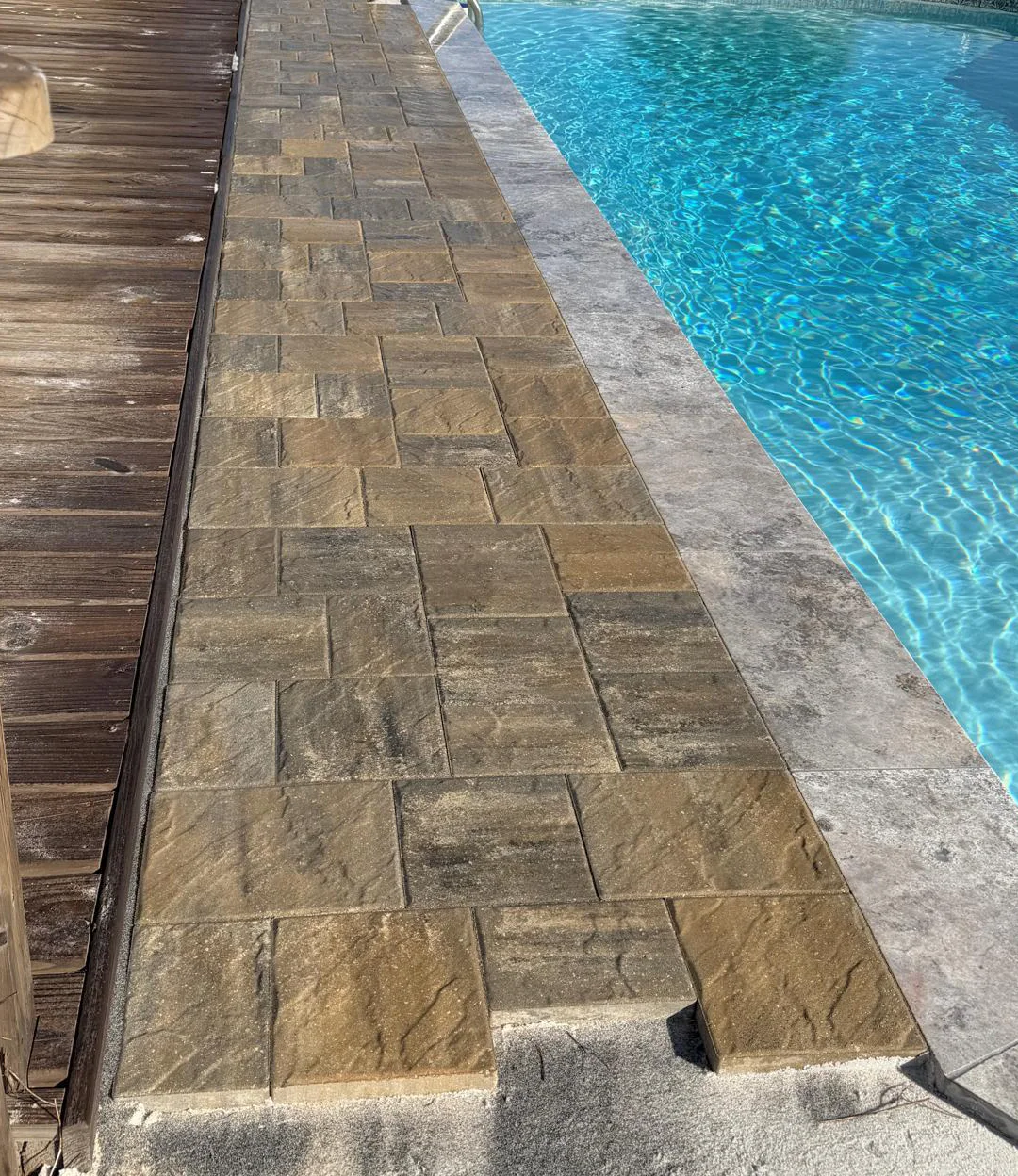
Travertine is the natural stone we install for coping, and HomeGuide describes it as a popular choice known for its cool surface and non-slip texture. Not all travertine is equal, though. These are the checks that matter:
- Exterior grade. The Natural Stone Institute lists the ASTM recommended limits for travertine: no more than 2.5% water absorption by weight, a density of at least 144 pounds per cubic foot and, for exterior use, a compressive strength of at least 7,500 psi. Ask the supplier for test data on the lot you are buying.
- Filled holes. Travertine forms with natural voids. The Natural Stone Institute says holes larger than 2 cm across, or holes that go through the stone, should be filled.
- A textured face. Tumbled and brushed faces suit the waterline. Polished stone gets slick when wet.
- Care with acid. Travertine is a calcium carbonate stone, and the Natural Stone Institute warns that strong acid cleaners “will burn and discolor the travertine.” That matters on plaster pools: when the interior gets an acid wash, the coping needs to be protected.
Granite, limestone, bluestone and sandstone are also used for coping. Hold them to the same questions: absorption data for the lot, a slip-resistant finish and a color light enough for summer sun.
Is brick coping a good choice for a pool?
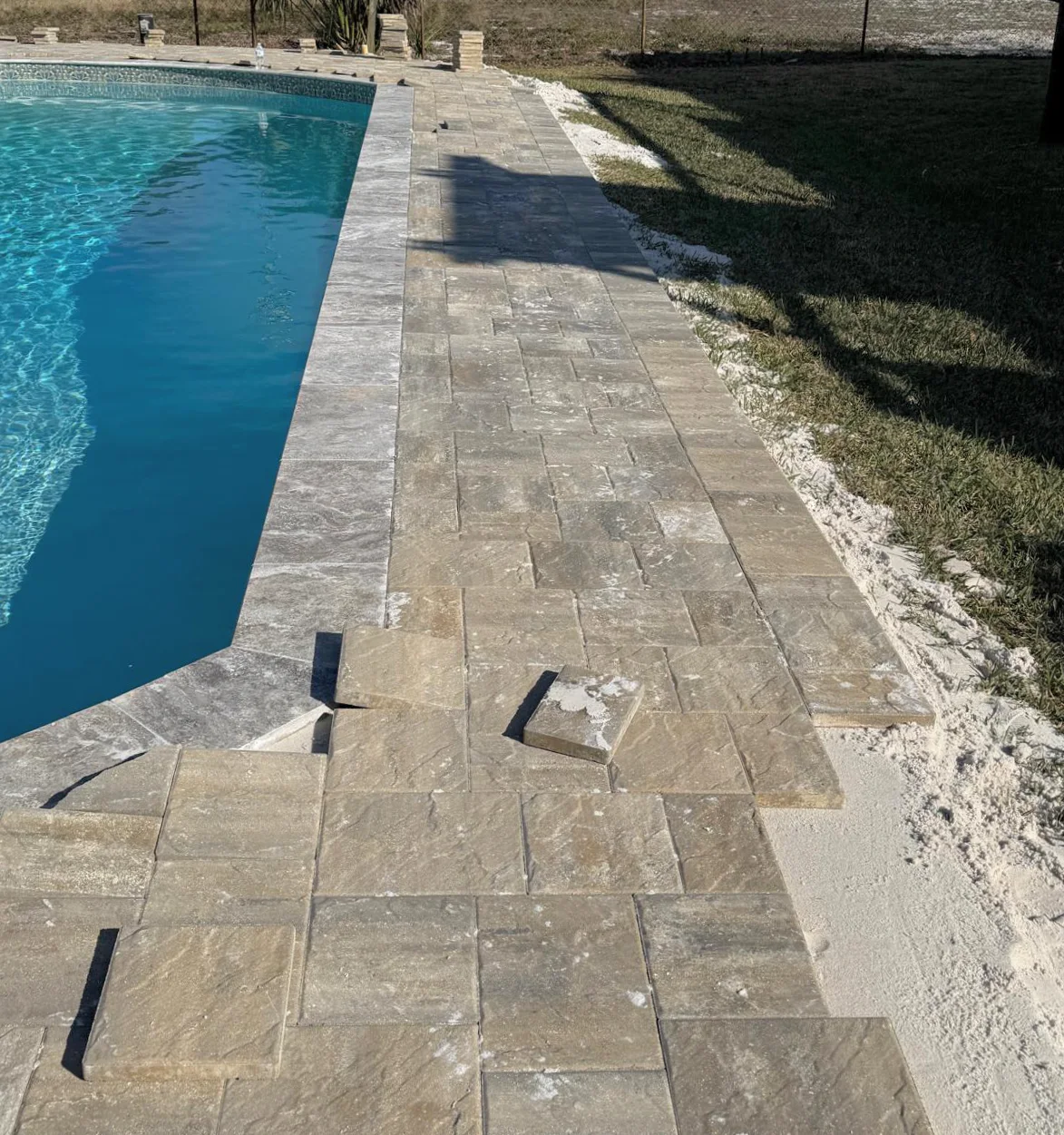
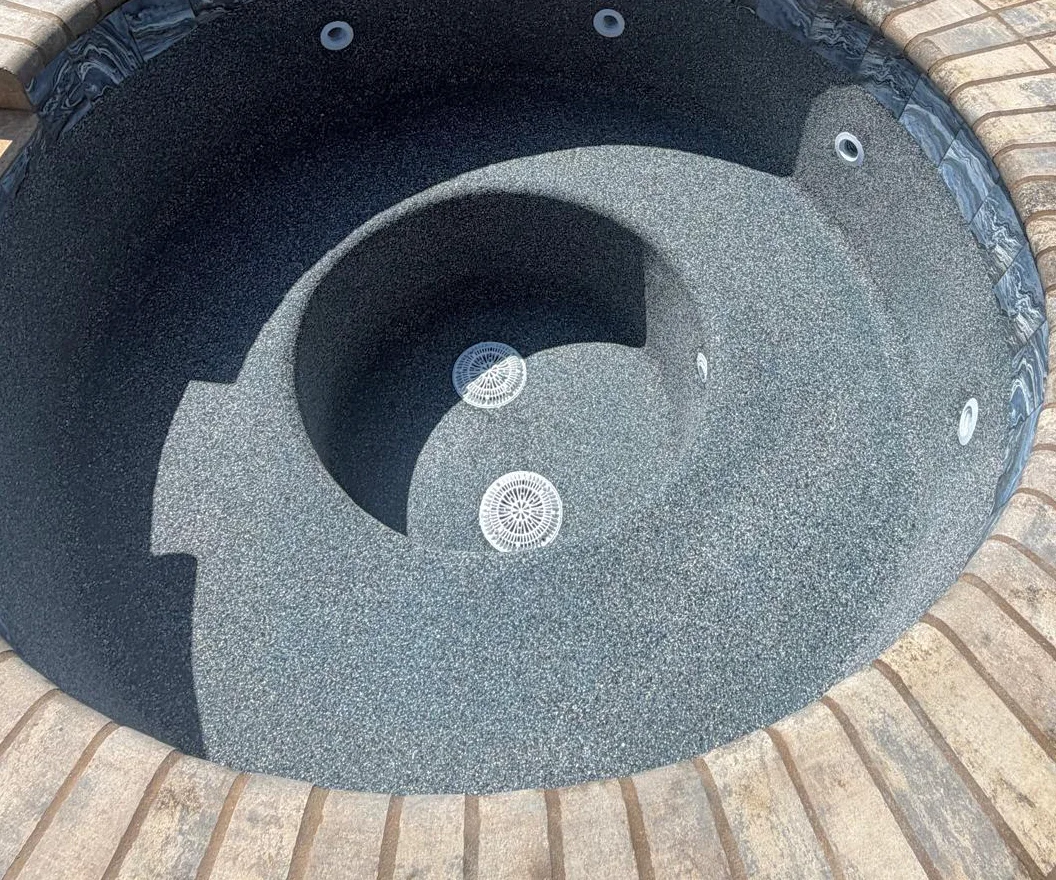
Brick suits traditional homes and pairs naturally with brick or paver patios. River Pools notes that brick coping has a bullnose or rounded edge facing the water, and HomeGuide describes bullnose edges as smooth, comfortable to touch and easier to grip. HomeGuide adds that brick is porous and needs sealing to resist water absorption and staining, and that well-maintained brick coping can last decades.
Not every brick belongs at a pool. Clay paving brick is graded under ASTM C902. According to the Brick Industry Association, Class SX brick, made for exposure where it may freeze while wet, may absorb no more than 8.0% water on average (16.0% for molded brick), while Class MX, meant for exterior use without freezing, may absorb up to 14.0%. The association adds that Class SX pavers are used for most exterior residential applications. Ask for brick rated for exterior paving, and plan on sealing it.
How do salt water and Gulf Coast weather affect coping?
If your pool runs a salt chlorine generator, read its manual before you choose stone. Hayward’s instructions for its salt cells say a qualified stone installation specialist should be consulted on the type, installation, sealant and maintenance of natural stone used for coping or decking around a saline pool, and Hayward’s warranty excludes “degradation of natural stone used in or immediately adjacent to a pool or spa.” In practice that means choosing a dense stone, sealing it with a product made for salt exposure and keeping a resealing schedule.
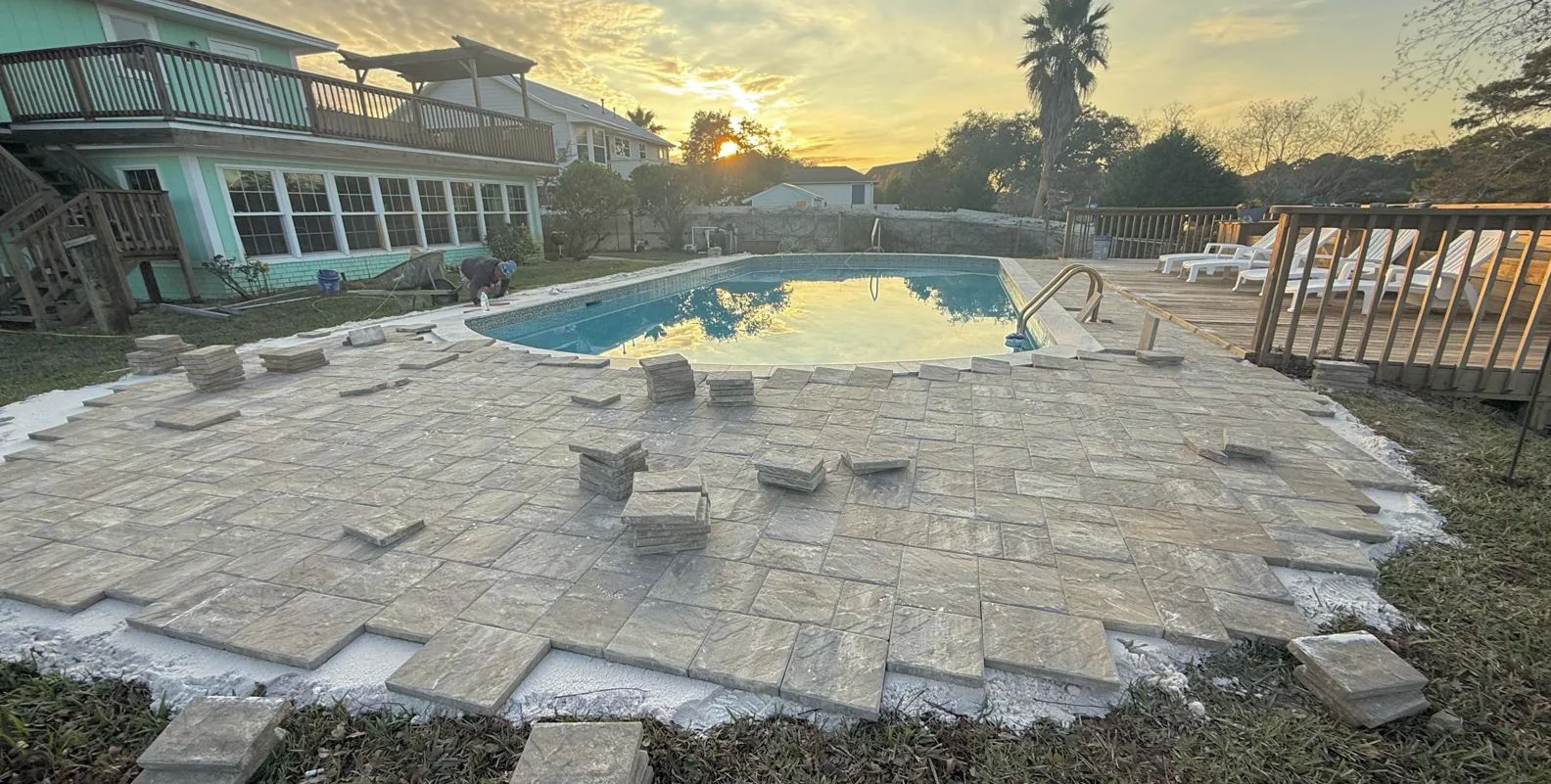
Water also has to leave the edge quickly. The 2024 ISPSC requires decks to slope away from the pool or toward deck drains (again, check what your local code adopts), which keeps splash and rain from running back over the coping and into the joints. If the coping is part of a larger update, a pool renovation lets the coping, the waterline tile and the deck be planned as one edge. And if you are also choosing a deck surface, see our comparison of travertine vs pavers for a pool deck.
If you are in Pensacola, Alabama or the Mississippi Gulf Coast and want a second opinion on your pool, request an estimate.
Sources
- How Much Does Pool Coping Cost? (2026), HomeGuide, accessed November 25, 2026.
- Inground Pool Coping: Idea and Cost Guide!, River Pools and Spas, accessed November 25, 2026.
- How Hot Do Swimming Pool Patios Get? Temperature Comparison, River Pools and Spas, accessed November 25, 2026.
- Travertine (Section 12), Natural Stone Institute, accessed November 25, 2026.
- 2024 International Swimming Pool and Spa Code, Chapter 3: General Compliance, International Code Council, accessed November 25, 2026.
- Turbo Cell Instructions and Limited Warranty (092006E Rev B), Hayward, accessed November 25, 2026.
- Technical Note 14: Paving Systems Using Clay Pavers, Brick Industry Association, accessed November 25, 2026.
- PAV-TEC-002: Construction of Interlocking Concrete Pavements, Concrete Masonry and Hardscapes Association, accessed November 25, 2026.